
Giorni perfetti.


- Sightseeing in Ascoli
- Swimming Spots
- Excursions In Nature
- Local Specialties
- Coffee & Sweets
- Lunch, Aperitivo, Bar
- Dinner
- Around Ascoli
Ascoli
with laissez-faire.
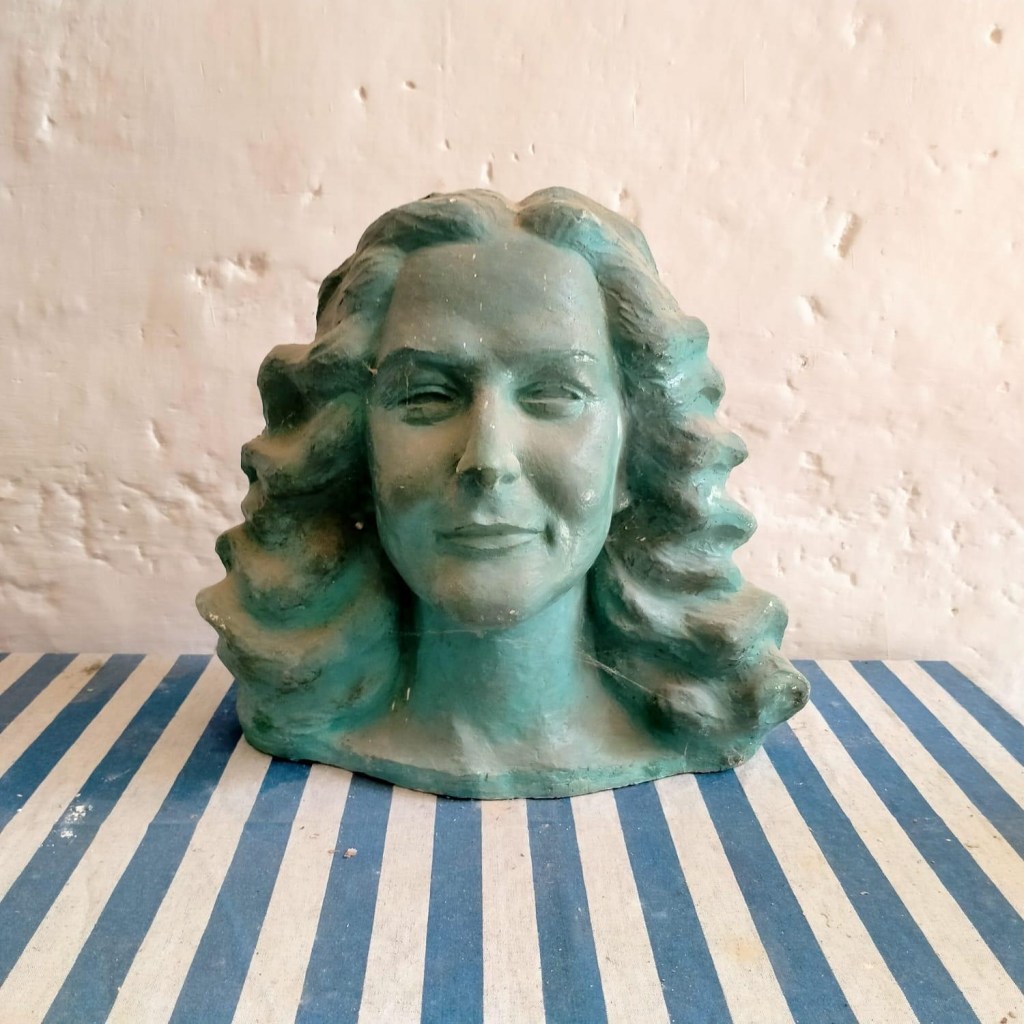
A little tale of Ascoli
“The Romans built their theaters for tragedies, but the people of Ascoli only showed up for comedies.”
Ascoli Piceno is one of Italy’s oldest cities, once inhabited by the Piceni, an Italic tribe known for assembling their warrior clans right here. Later, Roman legions marched in, laying their roads straight and wide. The saying, “Rome was still a field when Ascoli was already a city,” remains a popular expression today, skillfully used in conversations at the local bar, no matter the topic.
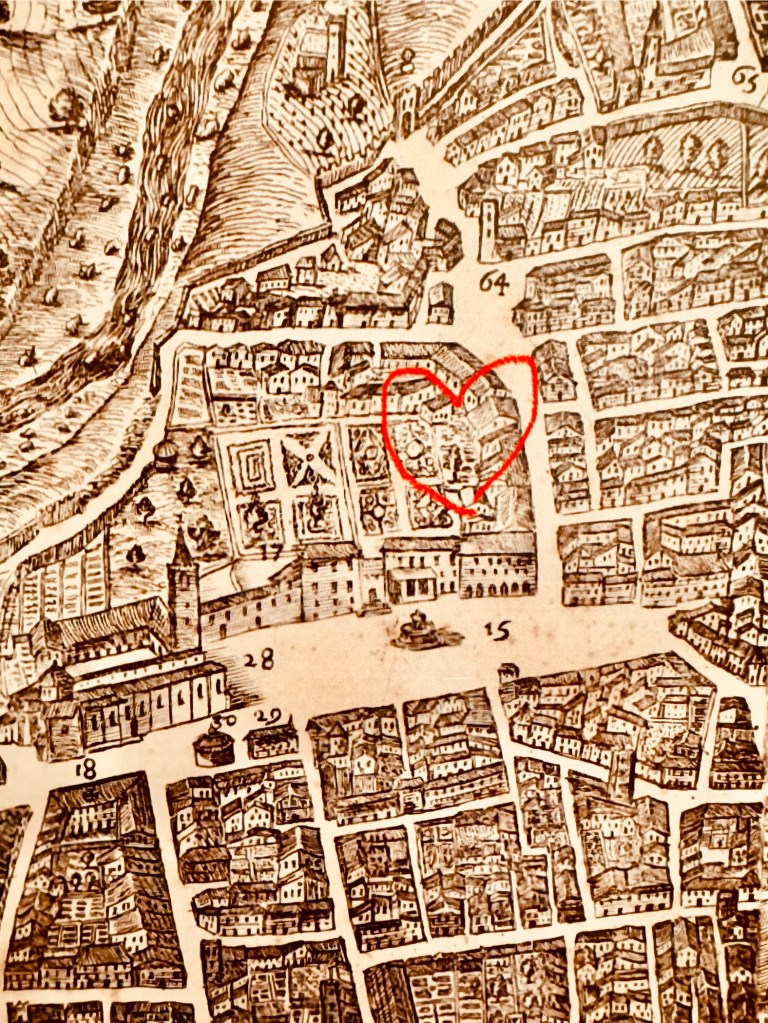
In the Middle Ages, the city flourished. Pilgrims, merchants, and a fair share of political intrigue and power struggles among noble families like the Malatesta penned the first thrilling chapters of Ascoli’s story—chapters still celebrated today by the famous Quintana jousting festival. Even though one might be tempted to imagine the people of medieval Ascoli leisurely constructing towers while swords clashed outside, we’ll settle for the fact that the “Hundred Towers” of Ascoli still stand tall today as the proud symbols of the city.
Today, it wouldn’t be a stretch to compare the historic center of Ascoli to Manhattan, a peninsula with numerous bridges linking it to the surrounding “boroughs.” The locals, quite logically, refer to these areas as the Bronx or Brooklyn, depending on which direction you wander.
The King
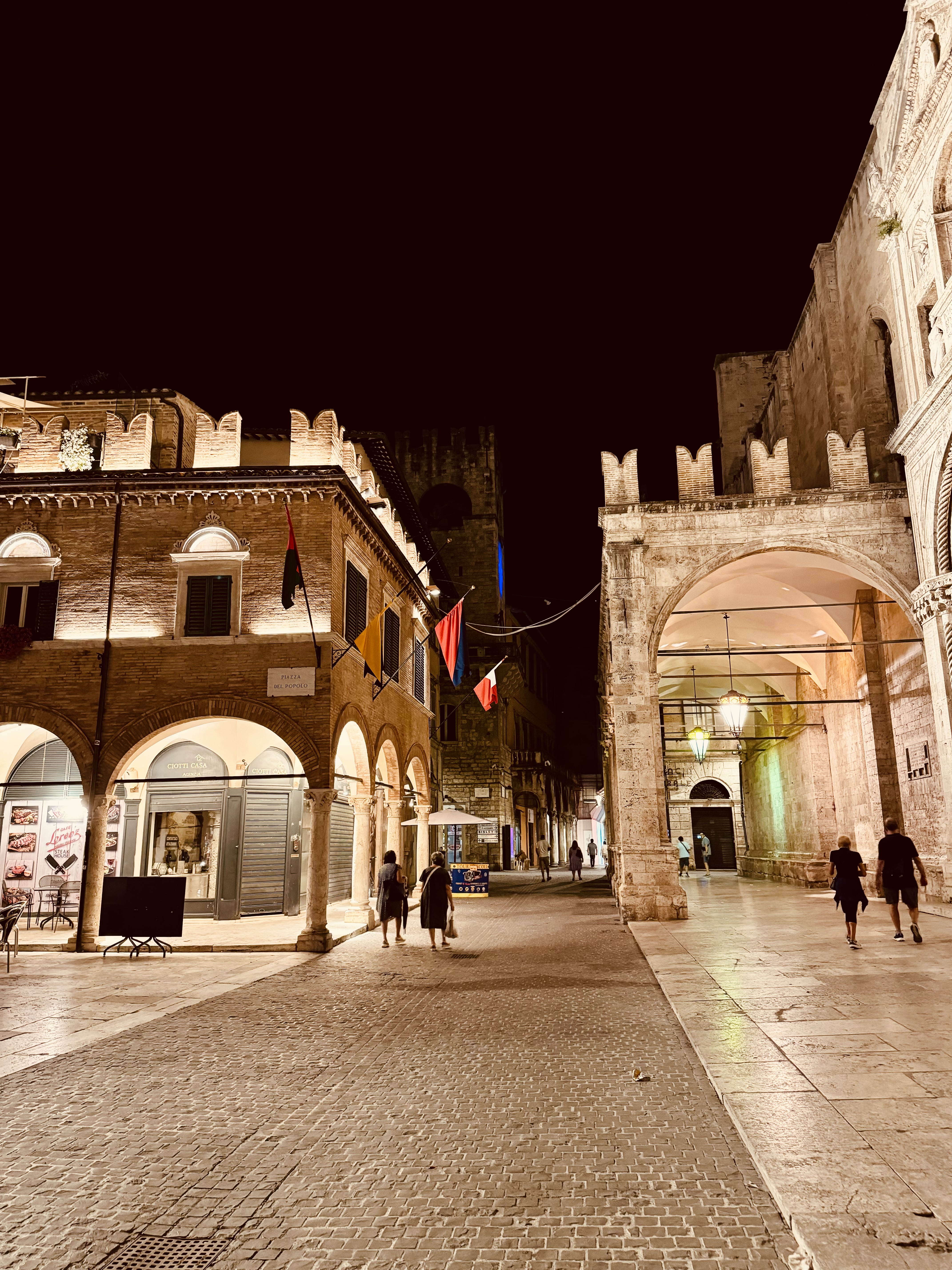
The Piazza del Popolo is the beloved King of Ascoli, and it’s no wonder the Ascolani call him “Il Salotto di Italia” – the Salon of Italy. And aside from the tango and samba dancers twirling in front of the Palazzo dei Capitani on summer evenings, there’s a hidden side to his majesty. For instance, unnoticed by the ignorant eye, no two of the many arches of this piazza are the same. In fact, it used to be customary for the shops that once lined this piazza to each build their own archway – the larger the arch, the more important the shop.
Size also matters from another perspective, specifically from a certain angle right in the center of the piazza: behind the foremost tower of the Chiesa di San Francesco and its dome you’ll spot a hidden bell tower. And perched on its railing a rather striking stone phallus, which, according to legend, the architect erected as a subtle comment on the church’s unpaid bills to stand the test of time.
On your way to greet the King grab a crêpe at Gelateria Mont Blanc, proceeding then to an aperitivo at Bar Centrale – and do not ever forget to pay your bill.
The Queen
Undoubtedly, the Piazza del Popolo dons a shining robe. But let us turn to Ascoli’s queen. Piazza Arringo is not only older and grander than Piazza del Popolo. She is also the more intellectual of the two. In the so-called “Arringhe,” gatherings with raging debates, the city’s most critical political decisions were made. And even today, you might spot the mayor on a Saturday in one of the bars, where you may join him for a caffé presenting your case.
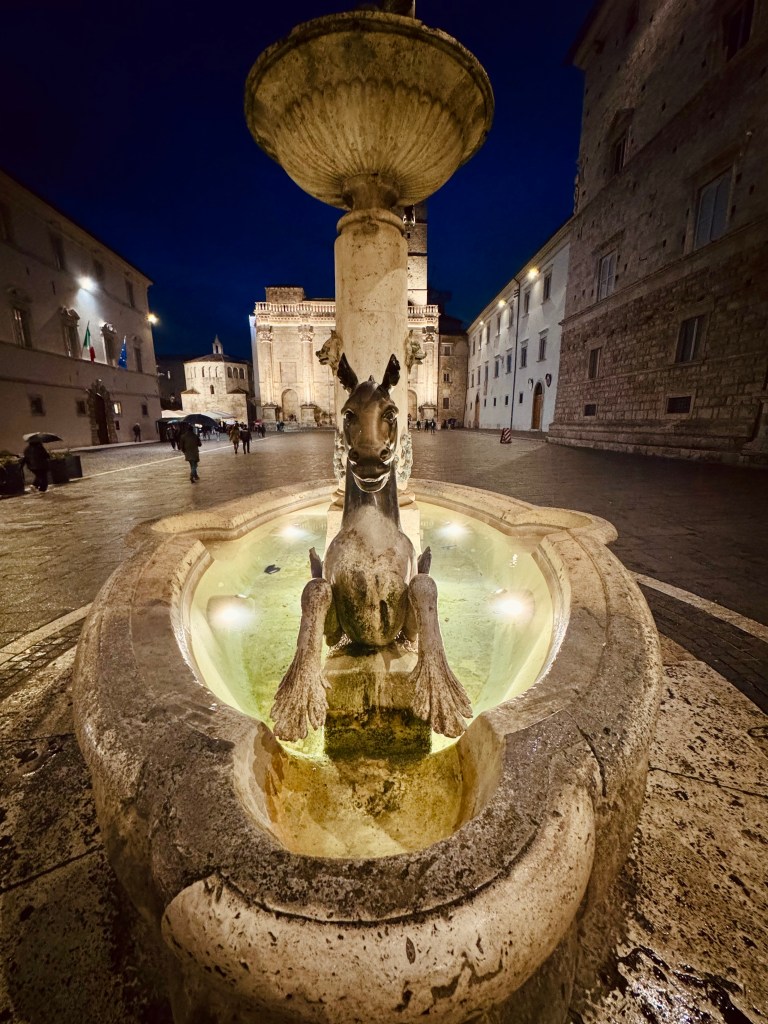
Those who drink the water from the mouth of one of the Arringo horses, feel in its fresh mineral taste the very essence of this city’s history that go back to ancient times – while any doubts about who holds the scepter in Ascoli are being washed away.
In the Rabbit Hole of the Giardino Vescovile
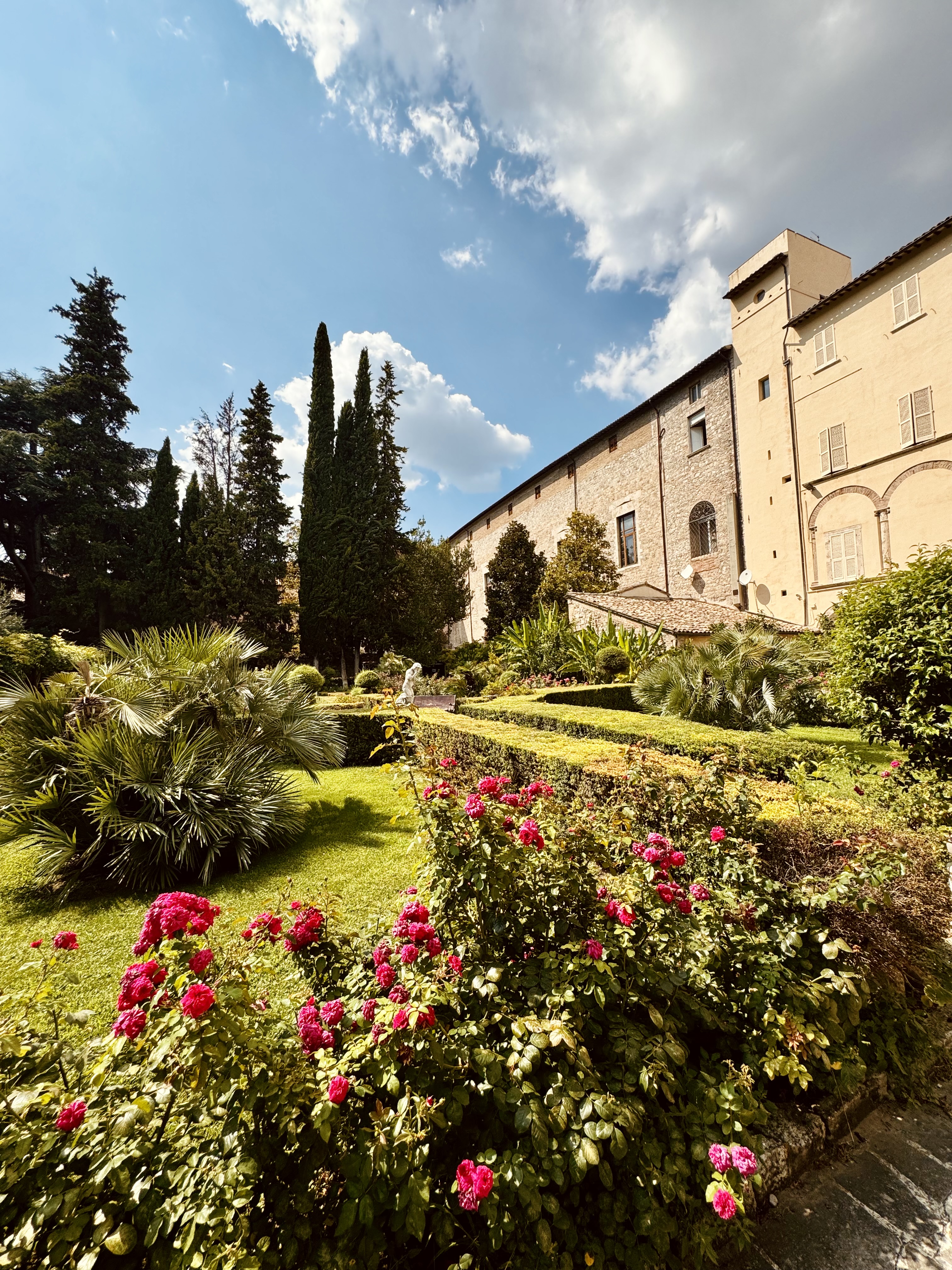
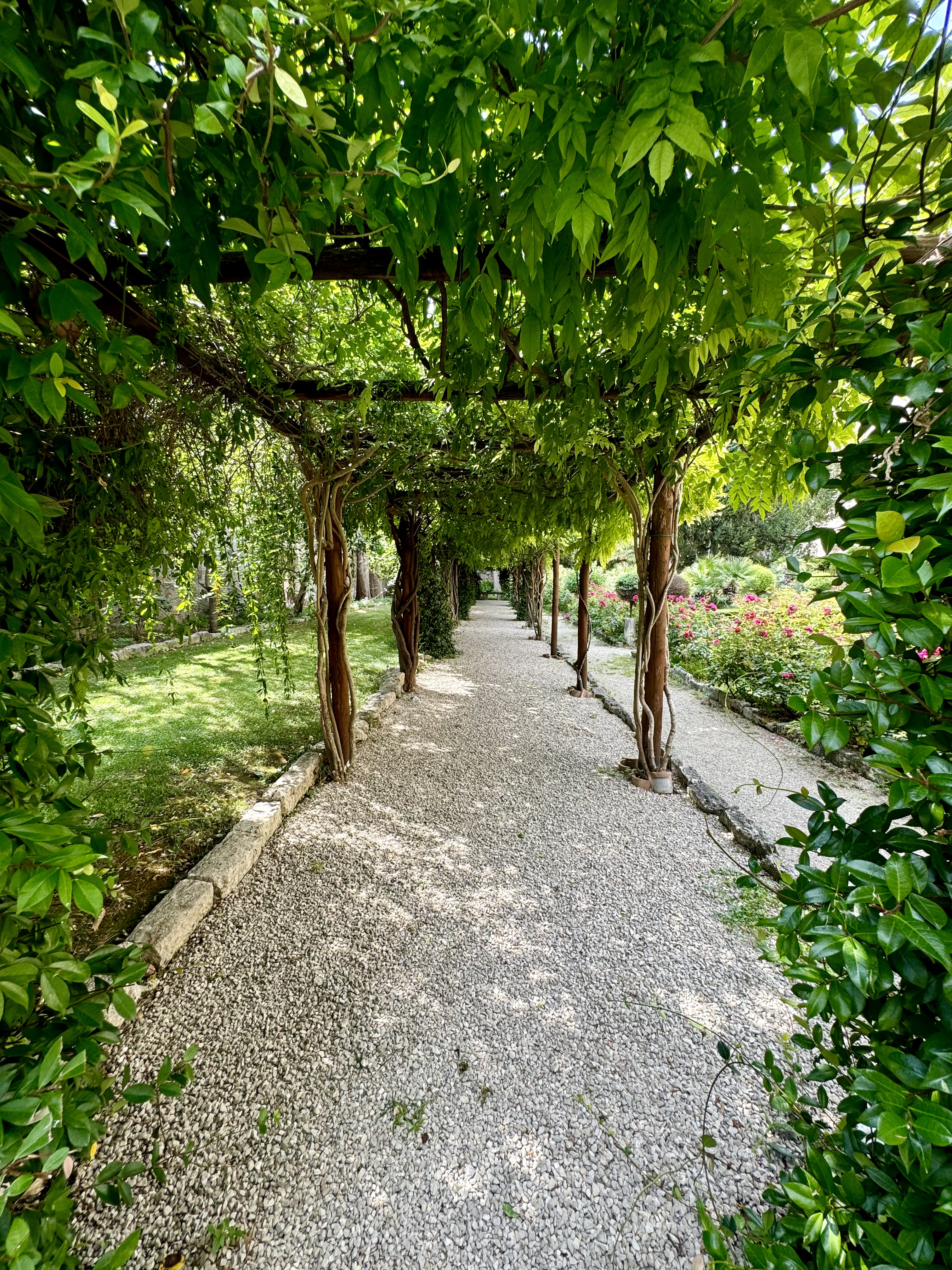
Ascoli’s close ties to the Vatican provide ample fodder for Dan-Brownish speculation. Secret circles and exorcists who have never seen the light of day are surely a given. Yet, what the average Ascolano sees of this Catholic hustle and bustle are priests and nuns on bicycles or enjoying their coffee.
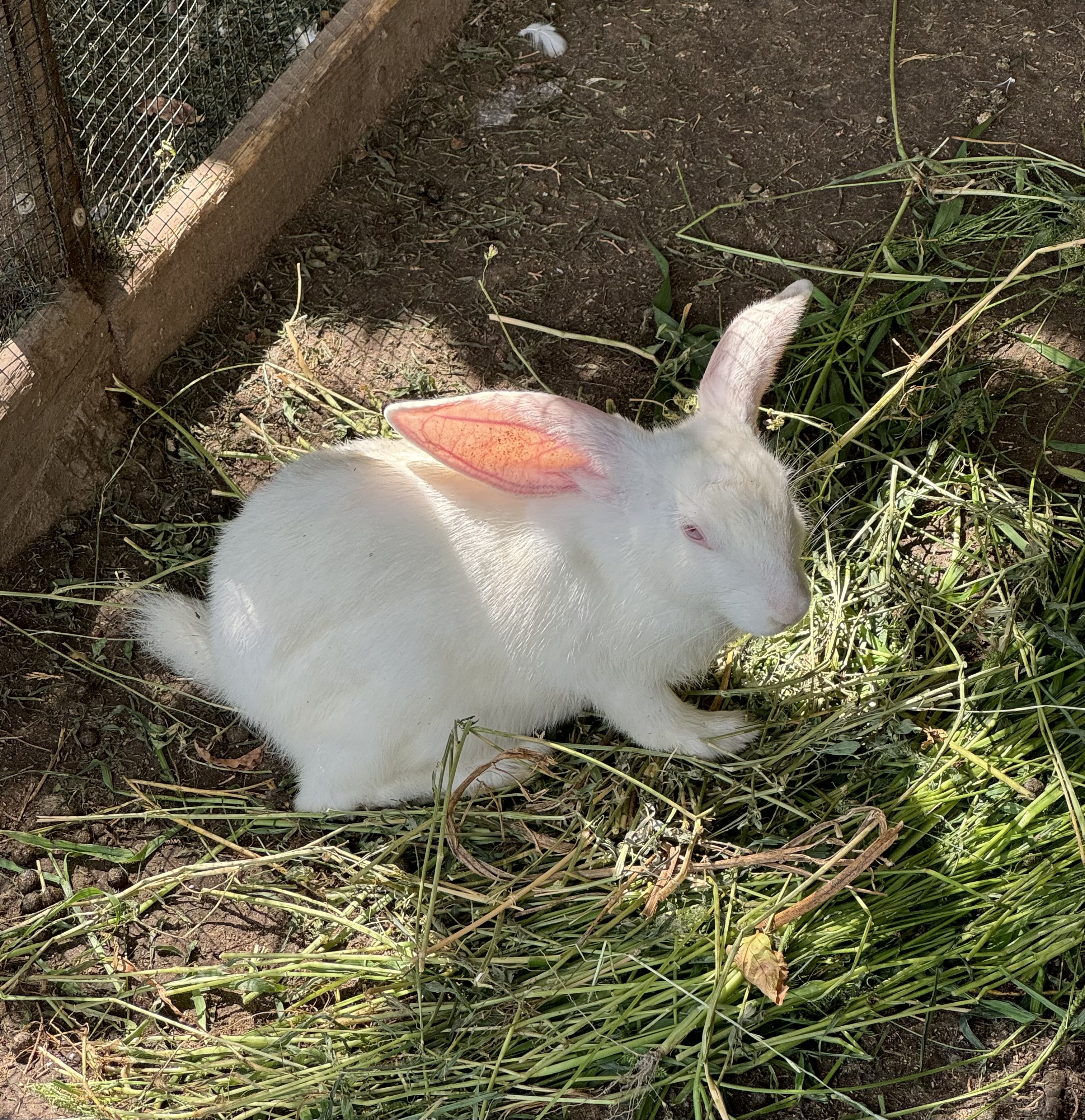
The opening hours of the cloister garden are more mysterious than those of heaven’s gates. But once on a quest for clues in the Giardino Vescovile one might discover in its farthest corner a suspicious twist: the rather sprightly peacock that once with its piercing cry kept the entire monastery on its toes, has miraculously given way to a flock of innocent, fluffy (and quiet) creatures…
The City Beneath the City
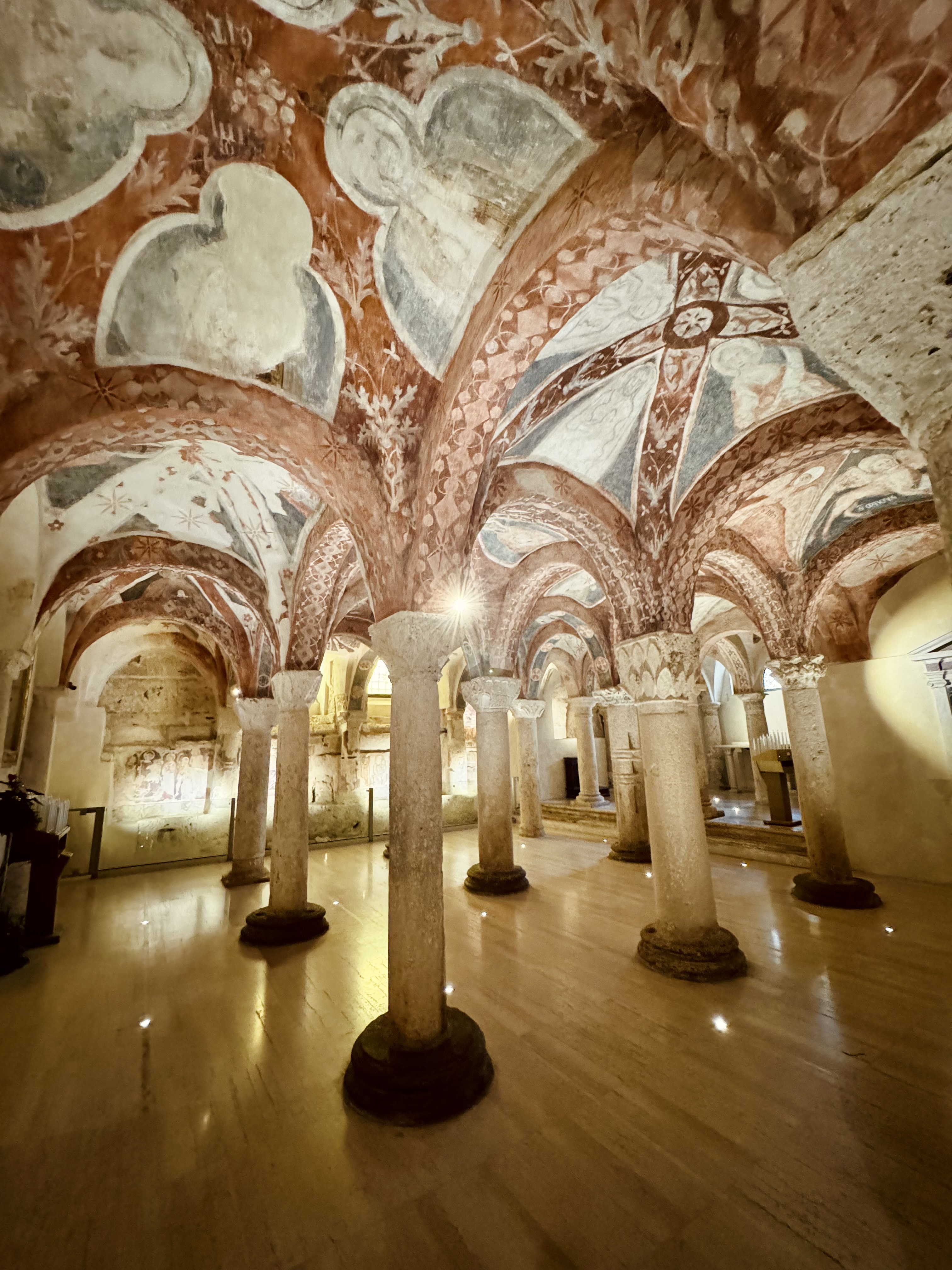
On further ecclesiastical matters, the visitor is best advised to head directly from the garden to the Cripta del Duomo di Piazza Arringo to see for themselves the secret passages beneath the city.
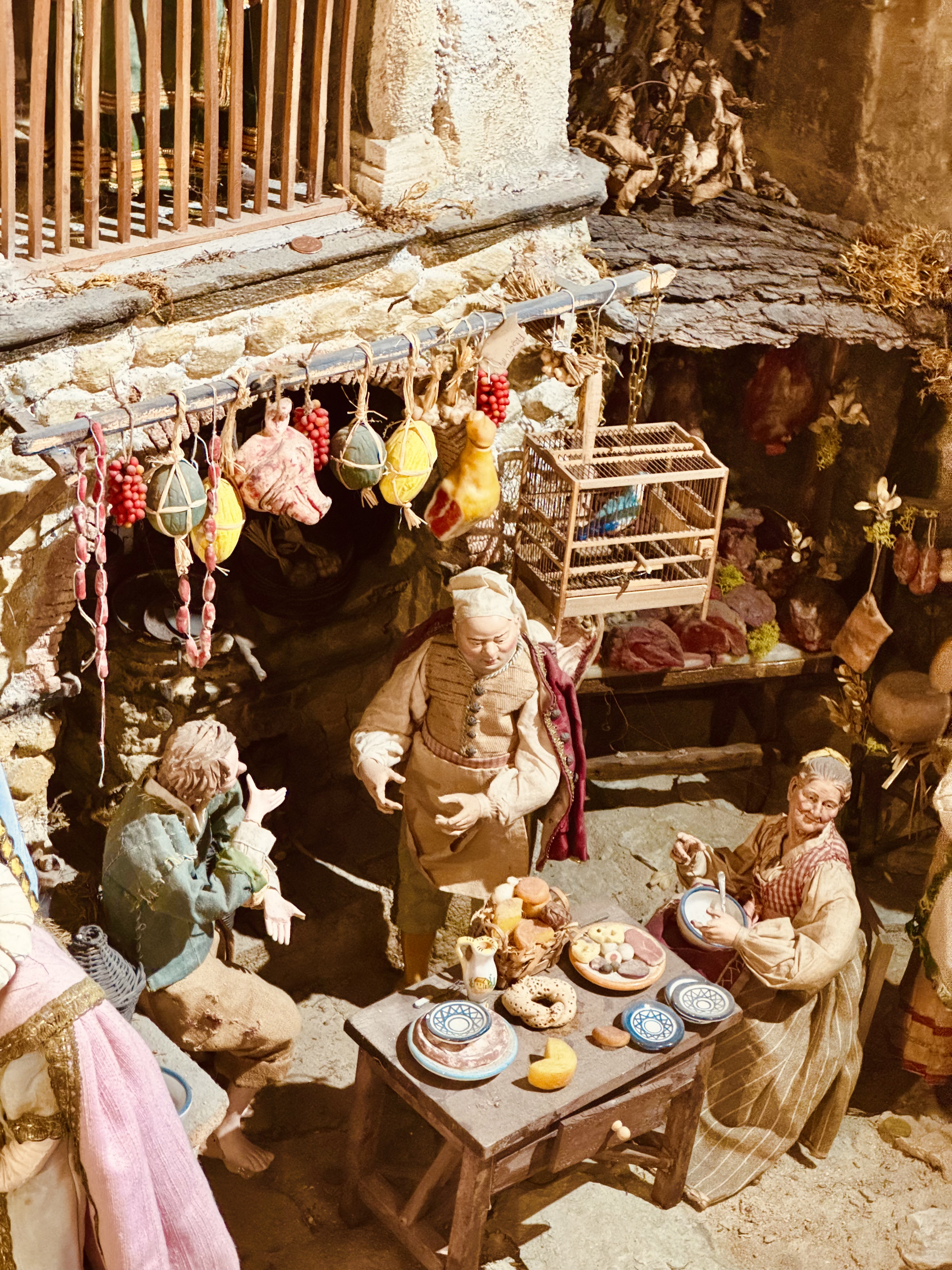
Rumor has it that the entire town is crisscrossed with tunnels — already proven is that these tunnels run right beneath the Atelier Arringo. In the crypt, you can marvel at astonishing mosaics and frescoes, as well as a nativity scene at the entrance, where the most important birth of the Bible is celebrated just as it should be.

On the milky way
Is it only for the oldies? Not at all. Passegiare – strolling – is the favorite evening pastime of every Ascolan, from 1 to 99. Round and round they go, from piazza to piazza. If you dare to break away from the current, you’ll find yourself wandering into the untouched secret side streets of the old town. Like the Via delle Stelle, the most romantic lane in all of Ascoli, where by day you can savor sweeping views over Piceno, and by night over a parade of young lovers locked in their starry-eyed embrace.
Underpants, Wooden Spoons & and Milano Fashion
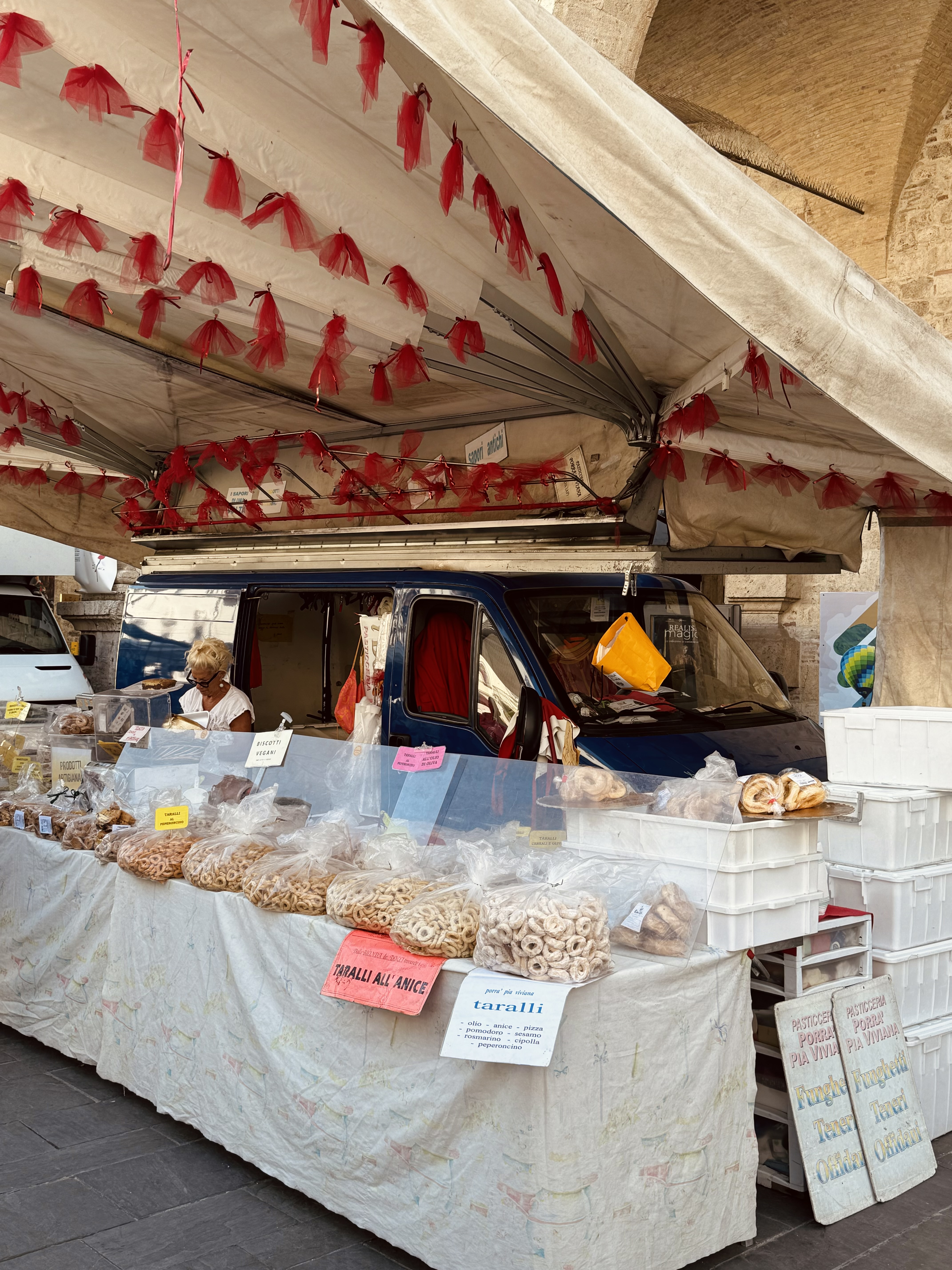
From rummage tables offering bargains for 1 euro to designer fashion for 100, every Wednesday and Saturday on the weekly market on Piazza Arringo and Piazza del Popolo, vendors from the surrounding area gather as a flock of ladies, with noses as keen as truffle pigs, emerge from their homes to haggle over bed linens, shoes, sweets, or kitchenware.
Every third Saturday, the usual market gives way to an antique fair. And instead of the bustling chaos, one observes sophisticated connoisseurs strolling leisurely, occasionally plucking a true treasure from the crates scattered about.
How to fall in love with water.
(And cool down in summer)

If only Monet had known…
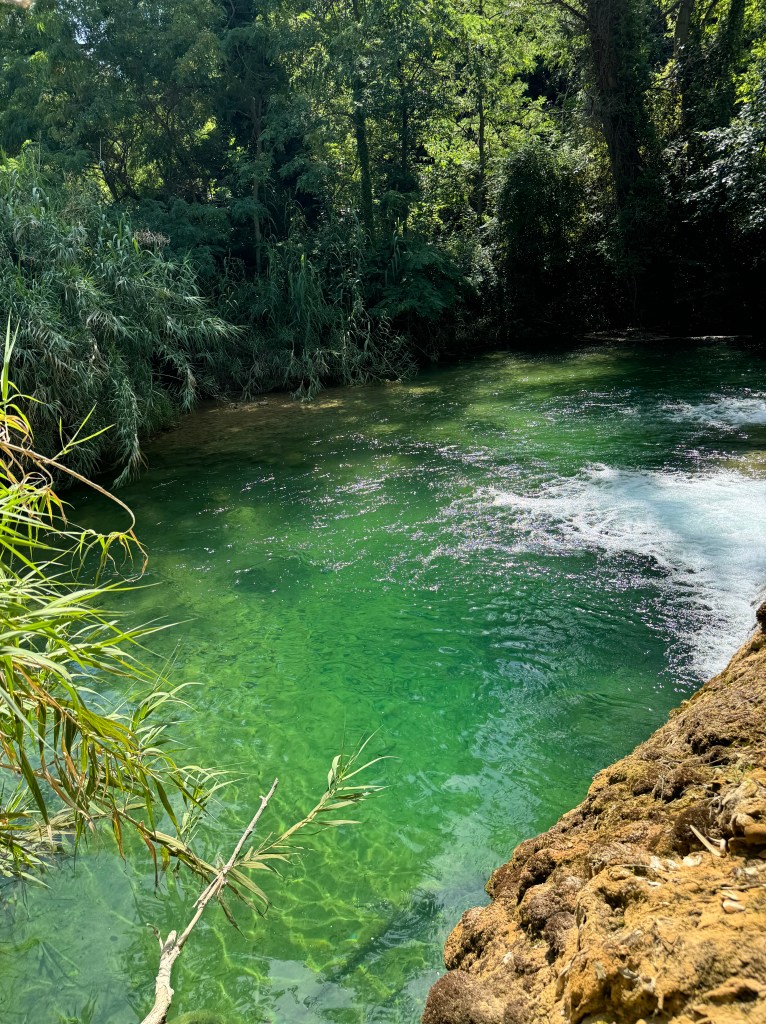
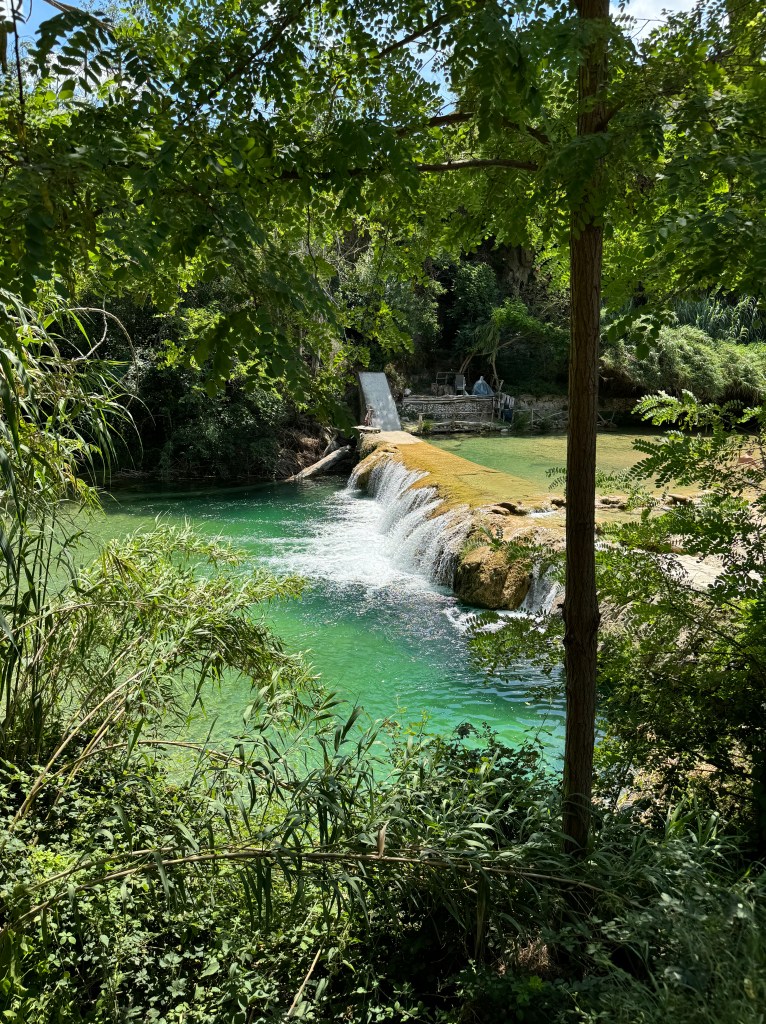
…that on the hottest days of summer there is nothing more refreshing than jumping into one of the marvellous pools of the Castellano, our beloved city river. Go early in the morning, when the young Italians are still asleep, or around 7 in the evening, when everyone goes out to eat to enjoy this place all by yourselves.
Walk or drive to Musei della Cartiera Papale, from there cross a small bridge and walk along the right bank of the river. There are several waterfalls. Pick the nicest one. Then catch your breath in the cold, fresh water.
Only for experienced and safe swimmers, at your own risk!

Sacred waters.
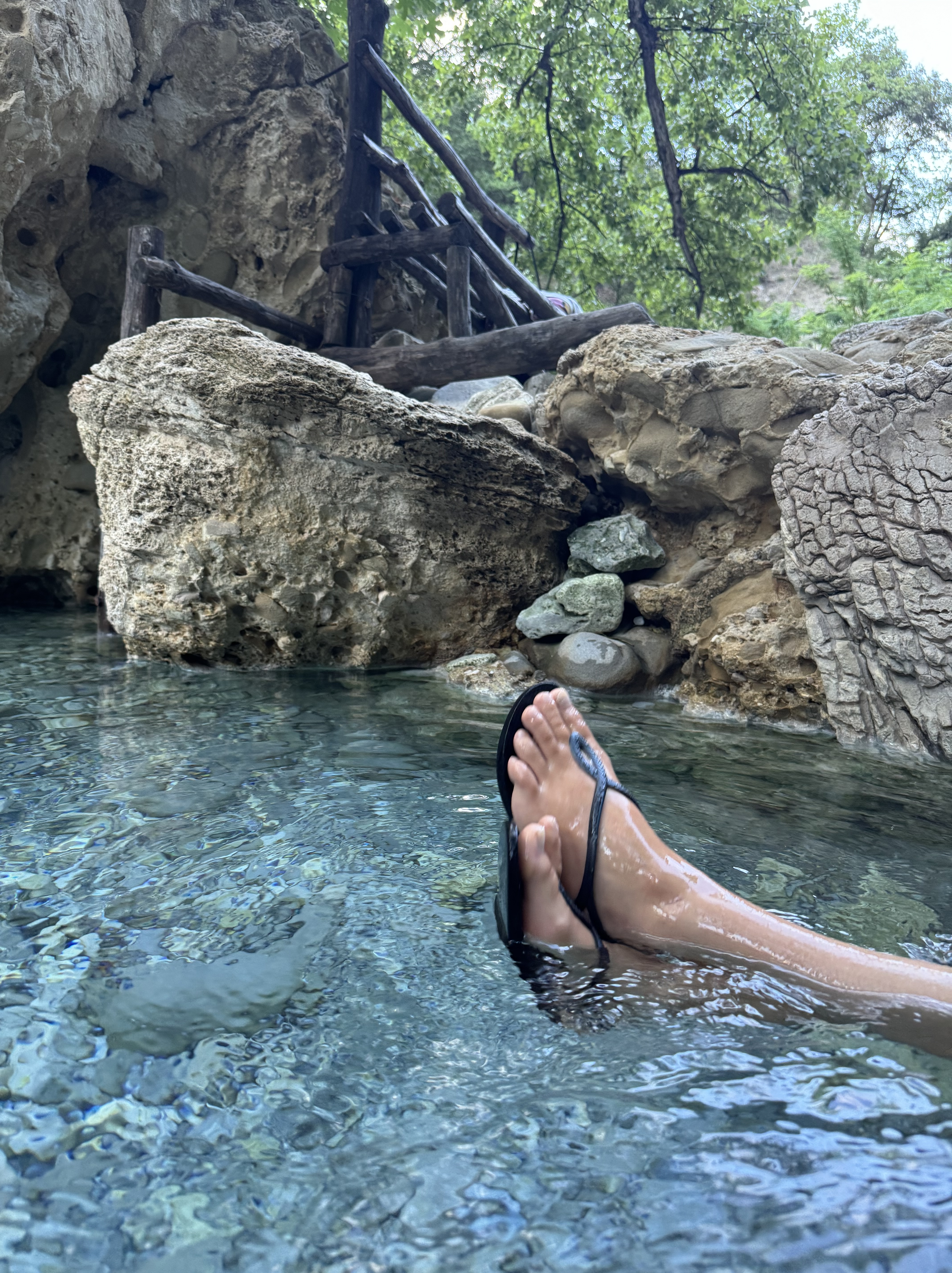
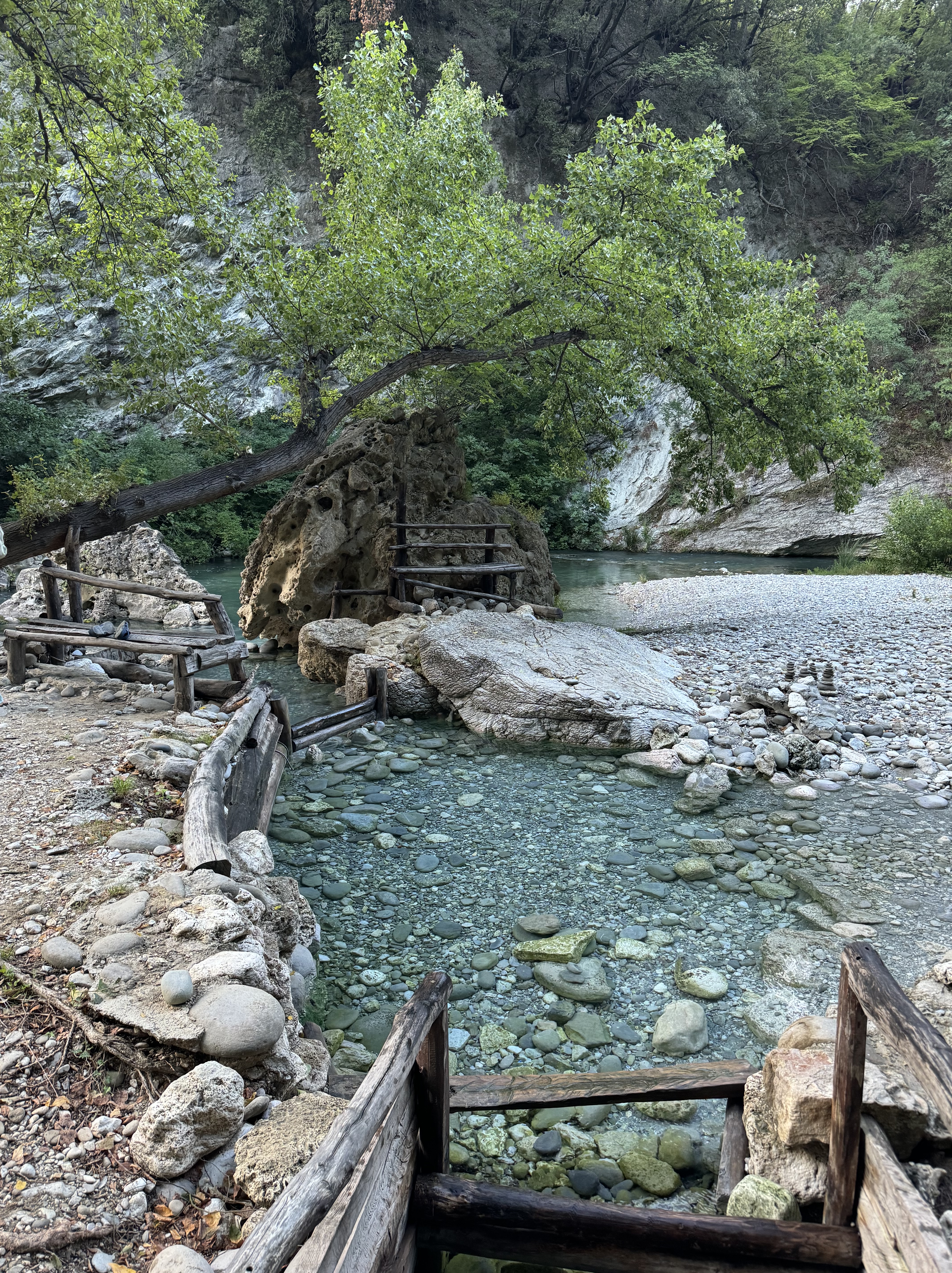
In ancient times roman popes (may) have bathed here. Stretch out in the lukewarm thermal sulphur water at Lu Vurghe di Acquasanta Terme in a charming small pool by the river. The best time to relax here in summer is from 7 o’clock in the evening, when you have it all to yourself. Take a lemonade and some grapes with you, listen to the birds, feel so very Roman and let the water work its magic.
Lavorare, lavorare, lavorare. Preferisco il rumore del mare.
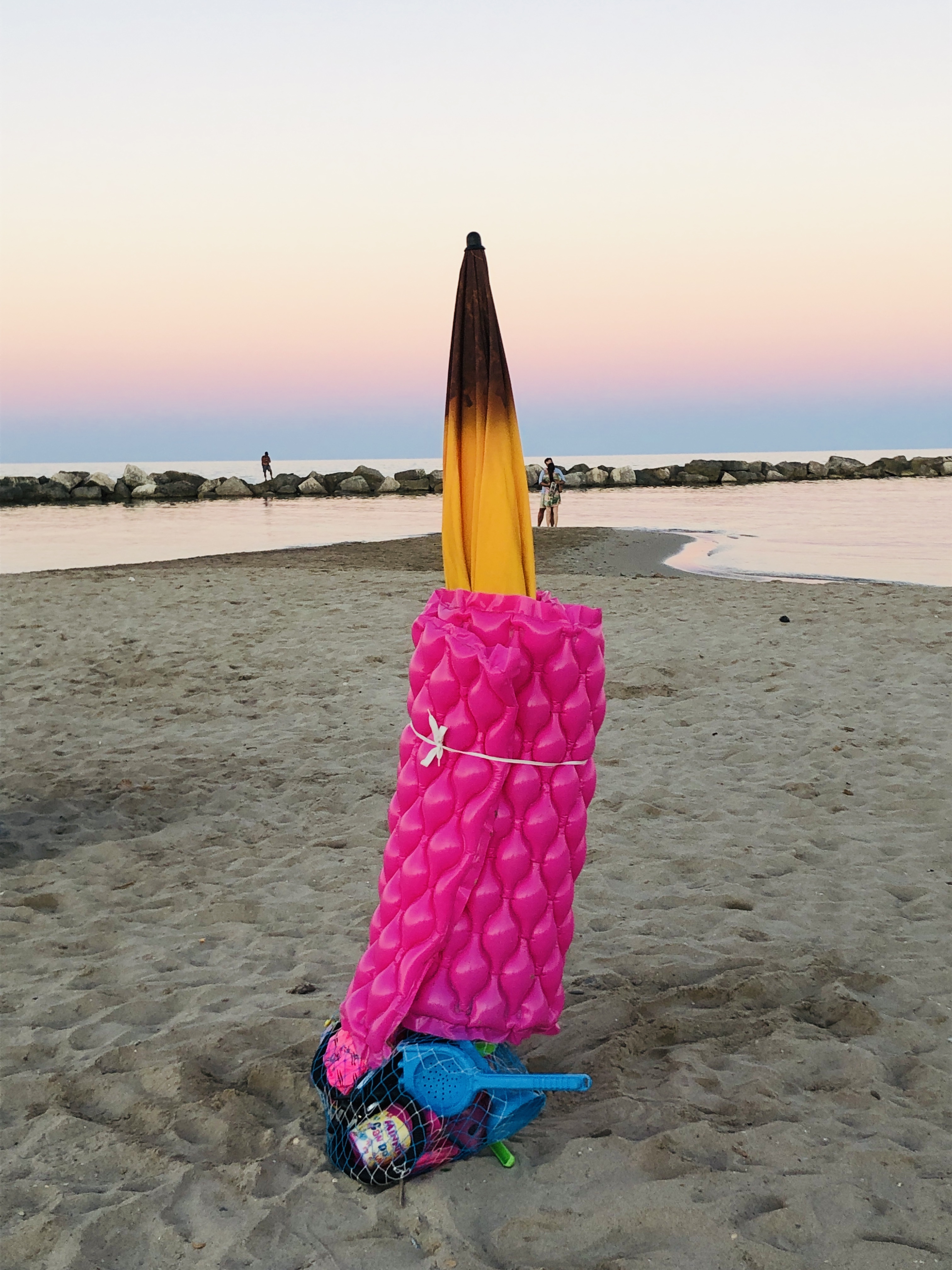
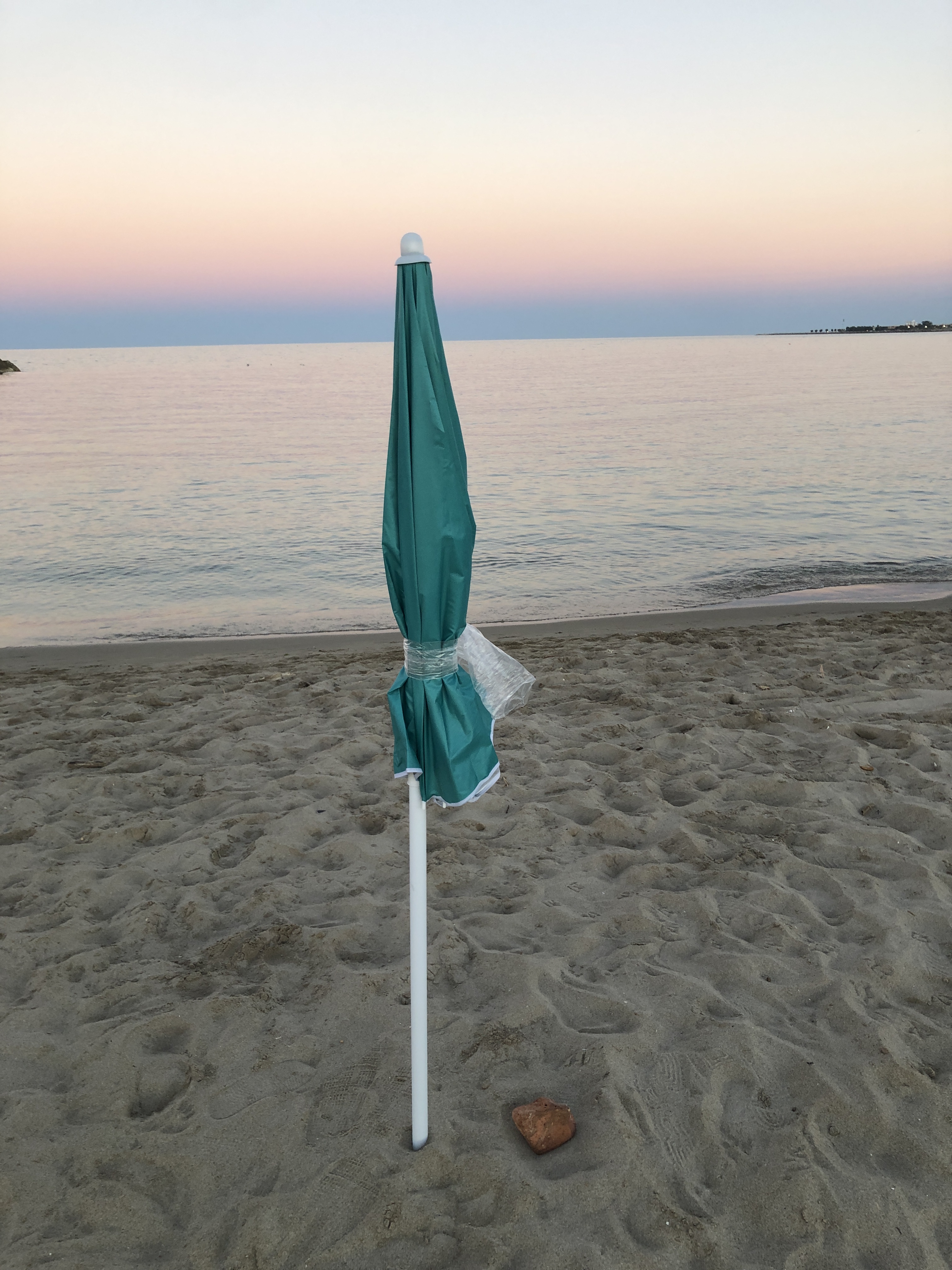
“Work, work, work. I prefer the sound of the sea.” This saying fittingly adorns a sculpture that has become the symbol of the seaside strip between San Benedetto del Tronto and Porto d’Ascoli. For those who fondly recall childhood vacations in Italy, Porto d’Ascoli offers a journey back in time: absolutely nothing has changed here. In an almost museum-like preservation of beach-culture, the sea is embraced by numerous chalets with their colorful umbrellas, most of which offer surprisingly good cuisine. In peak season, an umbrella with two sun loungers costs around 25 euros.
For a beach day make sure to find an unmarked parking spot on one of the side streets. All parking spots marked in blue or yellow require a cumbersome stamped ticket procedure for payment.
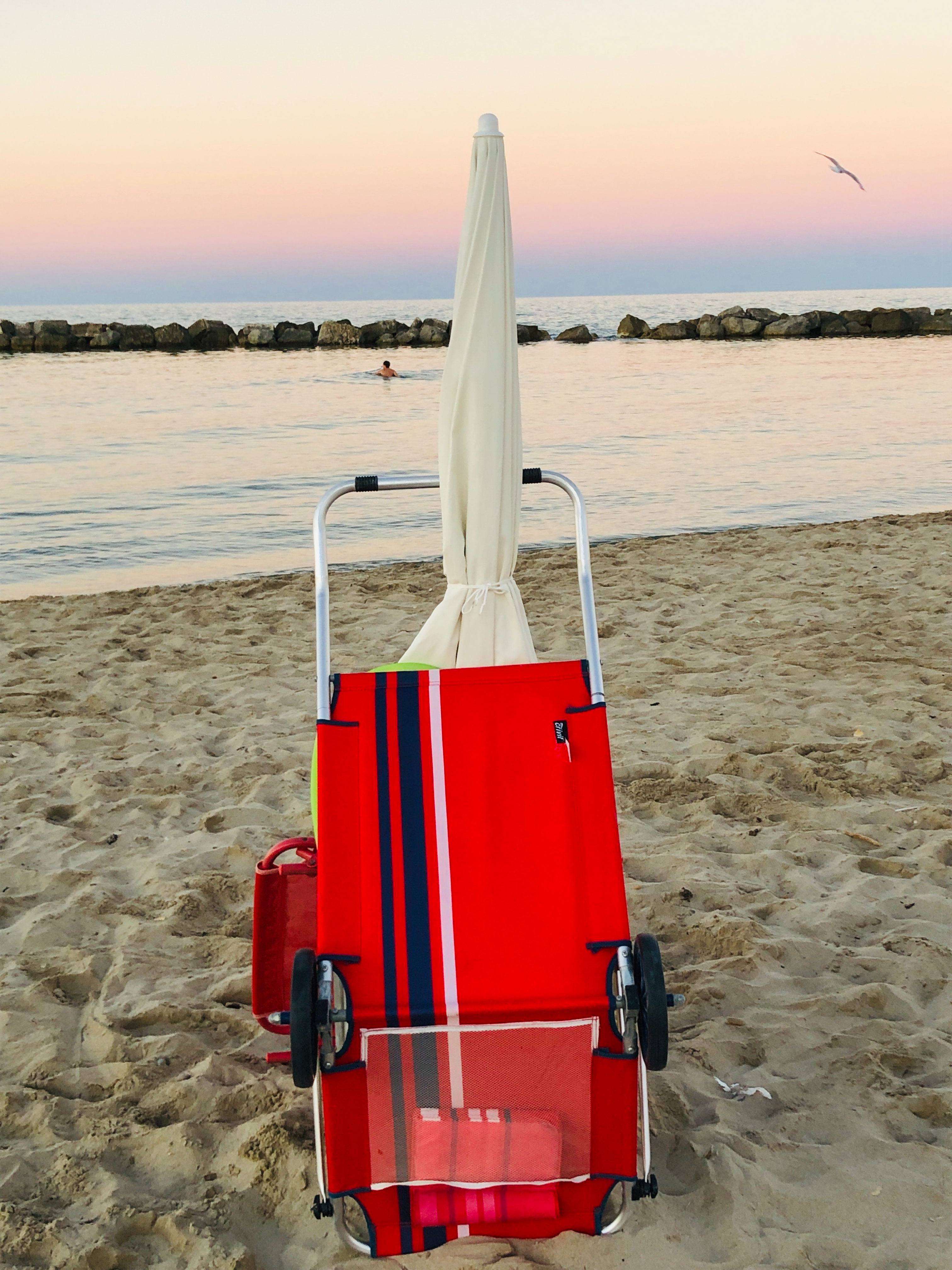
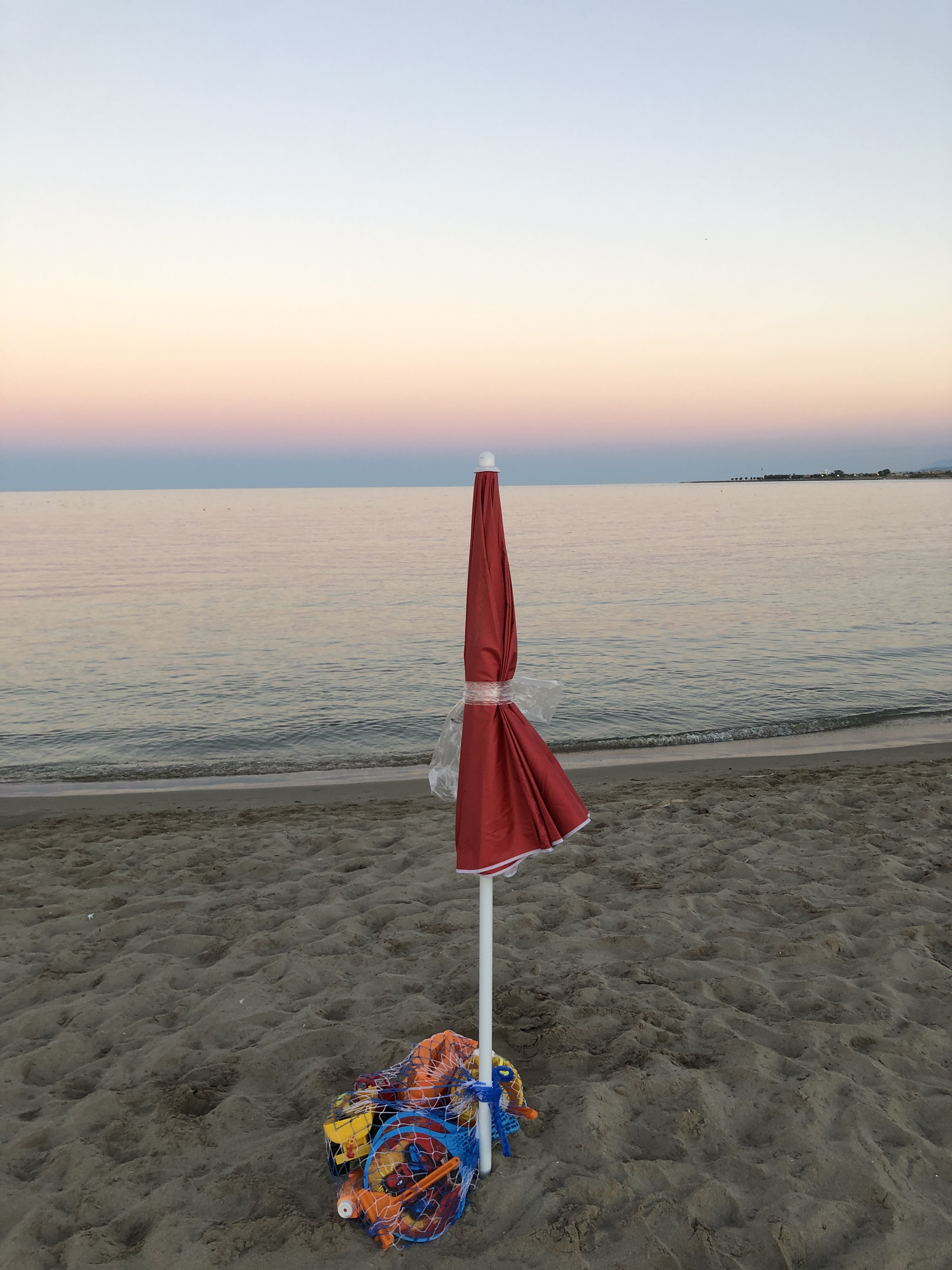
For those who prefer to bask in the sand on the free or nudist beach, keep to the right and make sure to also check out the other small Nature Reserve Riserva Naturale Sentina beyond the Nudists’ territory, that separates Marche from Abruzzo. In this marshland, a natural spectacle can be observed from small elevated stands, featuring protagonists like turtles, beavers, herons, and frogs. As in front, so beyond.
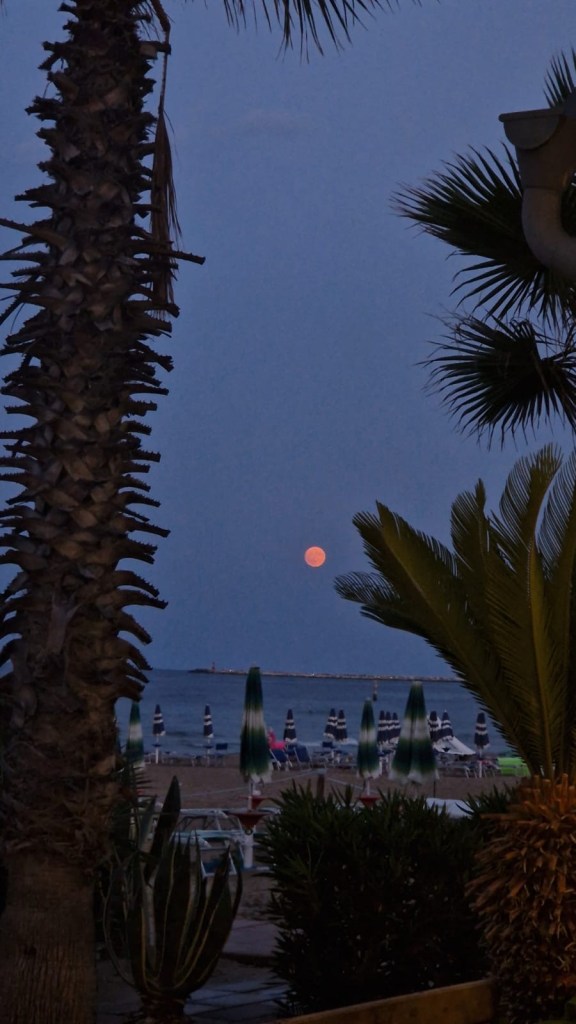
If, after a beach day, you find yourself craving fried seafood, hop in the car and take a short drive to the harbor kiosk Olio Pesce Fritto. Here, you can sit on barrels at the street corner and enjoy heavenly fried calamari, sardines and gambas with a glass of white wine. But beware! Never ask for a lemon. Due to the traditional feud between the football clubs of Ascoli and San Benedetto, requesting a lemon to your fritto (utmost betraying eating habit of the Ascoli tribe) will earn you a sour and playful refusal.
Excursions in Nature.

Moonland.
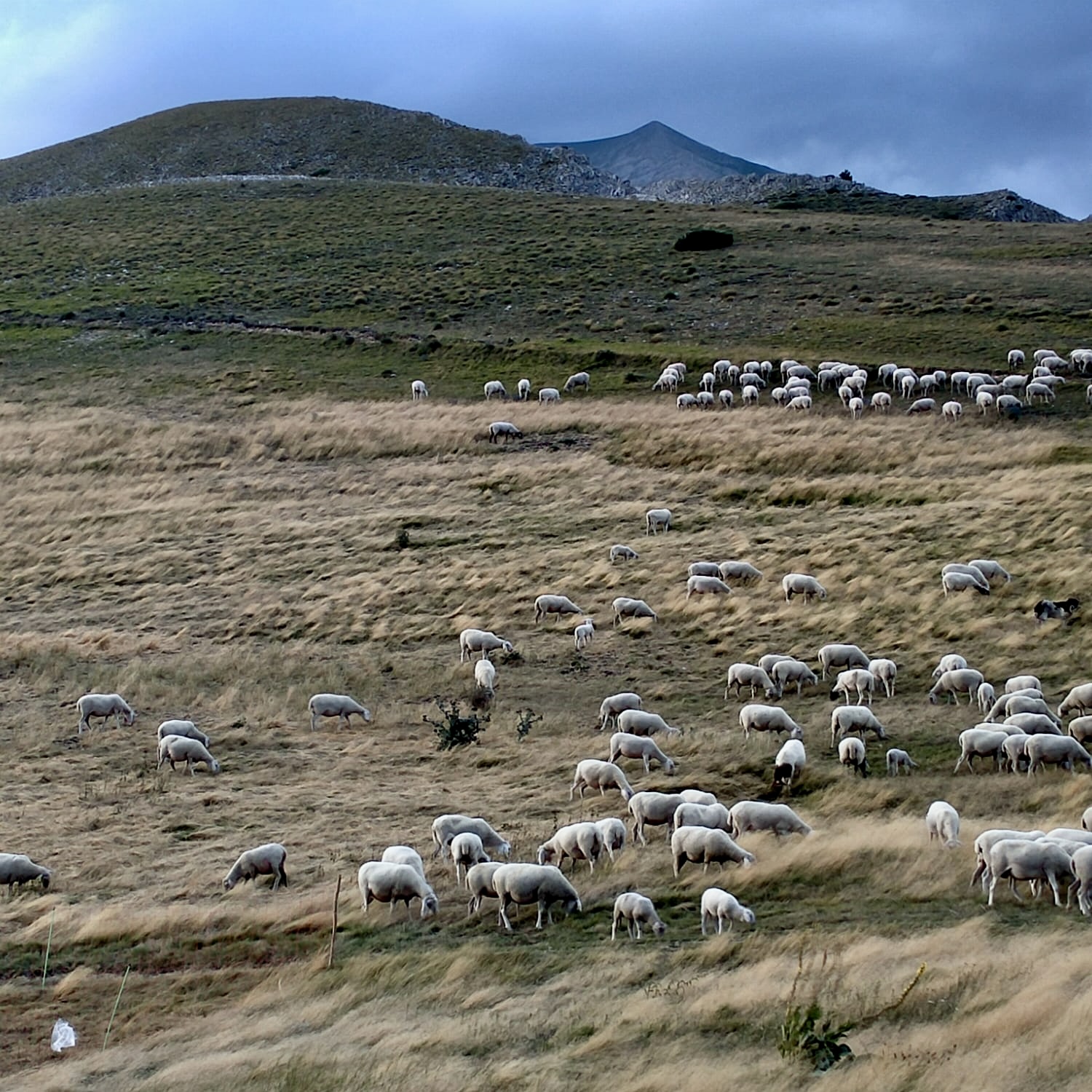
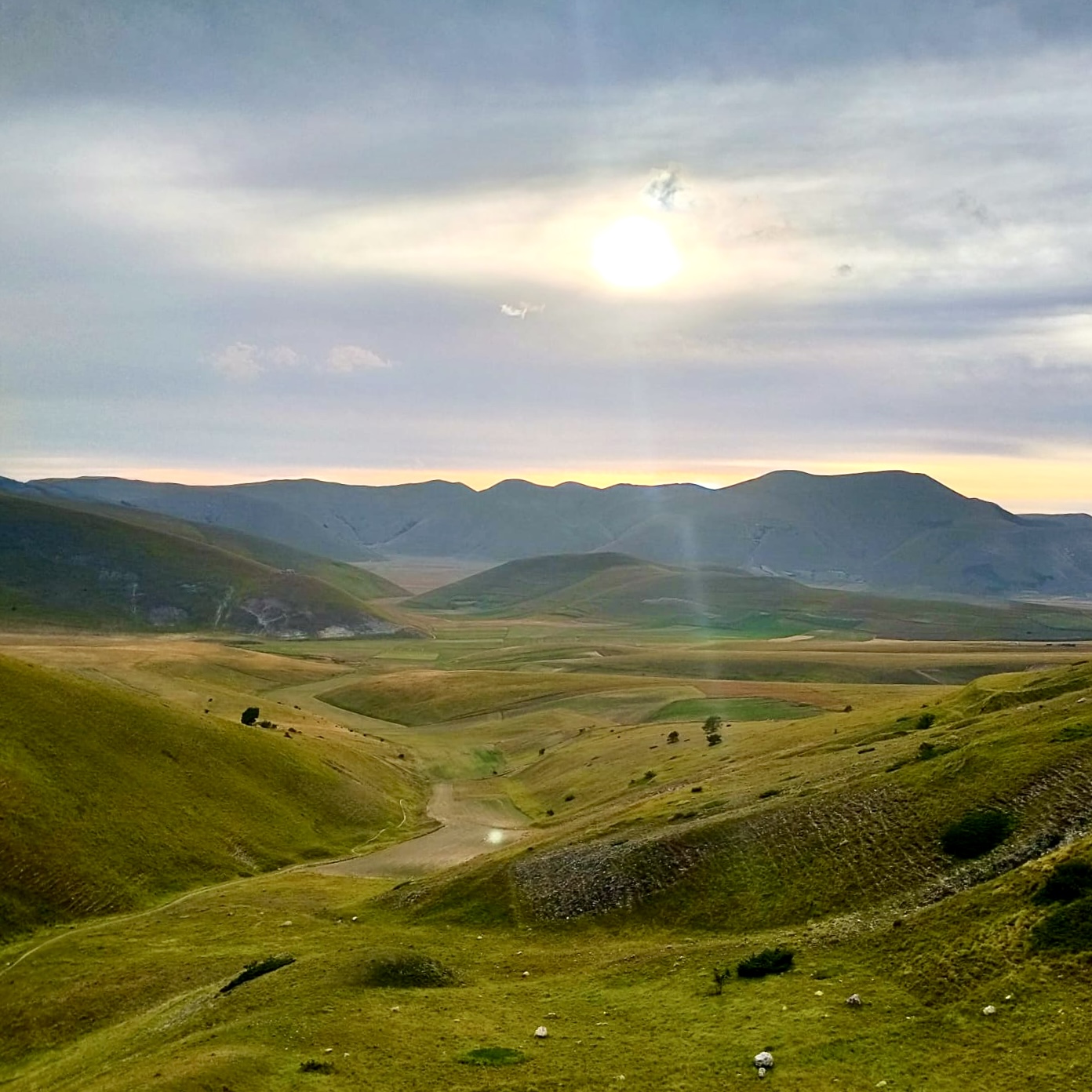
Even though a former dictator once planted a forest in the shape of the Italian boot to mark Castelluccio as his territory, the vegetation, climate, light, and sky of this plateau have long since signed their declaration of independence: temperatures or storms can never be predicted here, as nature plays by its own rules. In June, the entire plain blooms with poppies and other flowers, bathing the meadows in red, yellow and blue as far as the eye can see. In autumn, the trees put on their most eccentric costumes. And in winter, the snow can be several feet high.
This magical place about an hour from Ascoli is home to bees, sheep and horses and attracts hikers, motorcyclists, horse riders and stargazers all year round. A breathtaking field trip, ideal for a long walk and the obligatory salsiccia sandwich at the smallest kiosk in the unmissable Village of Castelluccio. Bring your telescope and a jacket – even when the rest of Italy groans under the heat…
Mangiare? Mangiare!
Do like the Ascolani do.

Olive all’ascolana
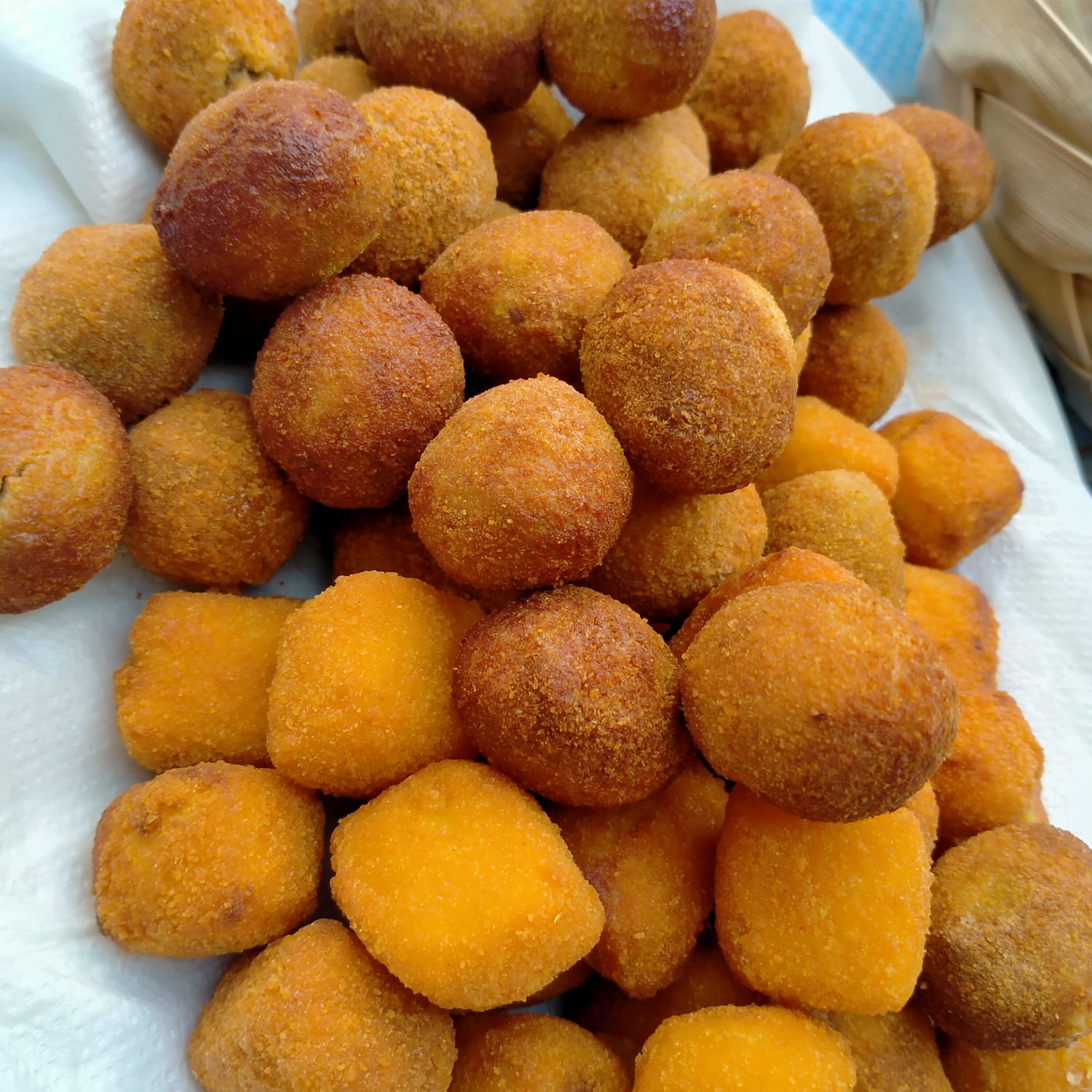
The olive all’ascolana was invented around 1800 in the noble kitchens of the town of Ascoli Piceno, where the chefs of the fine aristocratic families used their surplus meat stocks by stuffing tender olives. To this day, Ascoli is admired throughout Italy (and the world!) for this small, crunchy specialty, whose passionate love was also kindled by historical figures such as Gioachino Rossini, Giacomo Puccini and Giuseppe Garibaldi. The olive all’ascolana can be enjoyed at all times of the day or night, as an appetizer in any Ascoli-restaurant or served to the aperitivo – and should be explicitly and extensively praised to every restaurant owner.
Il Forno
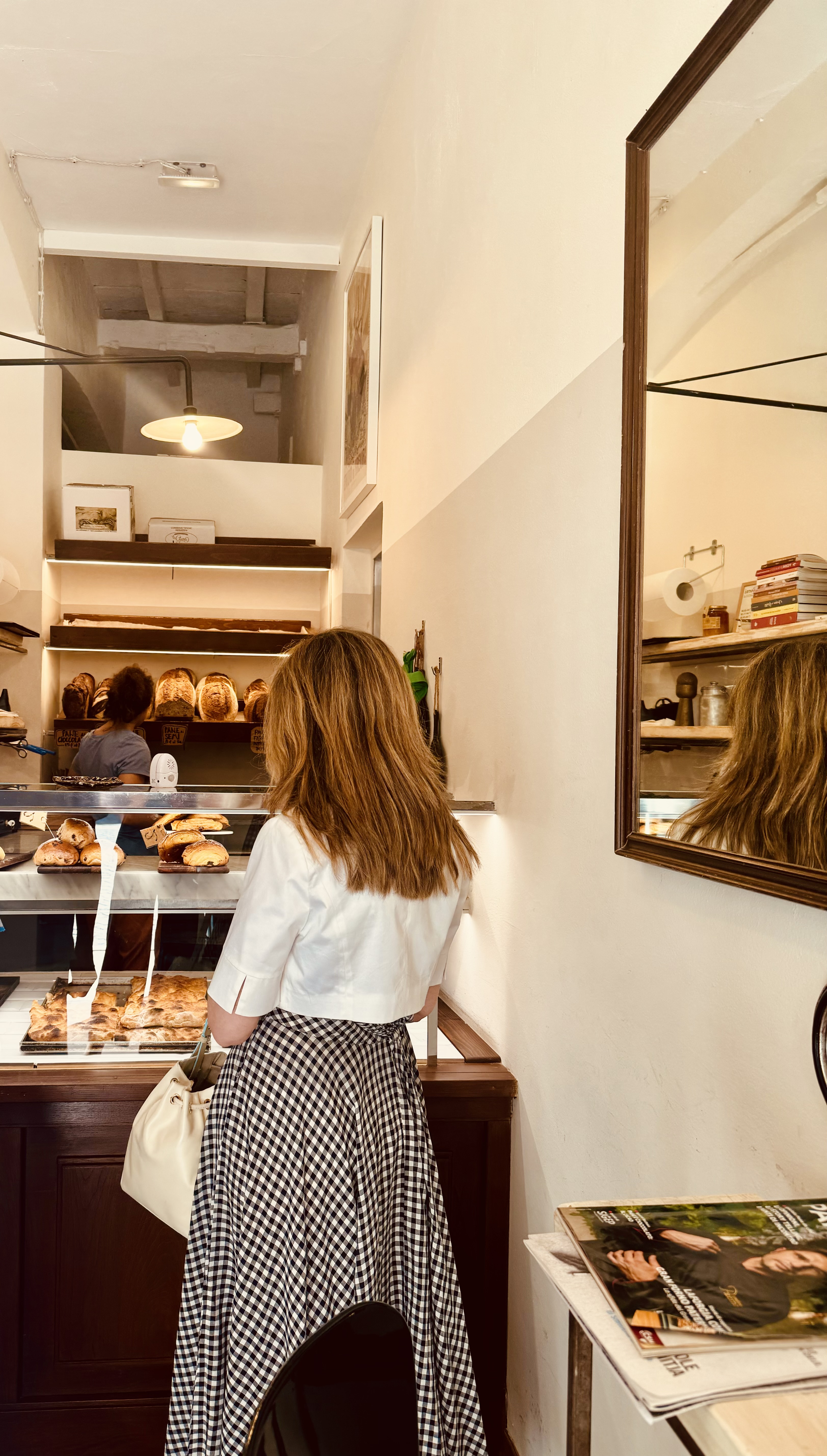
The forno is an integral part of Italian life. Here, you can find dough in its most delightful manifestations. Anyone who underestimates the bread in this part of Europe must try the wood-fired bread at L’assalto ai Forni in Piazza Arringo. Truly divine loaves are baked here – with a chocolate variety as the crowning triumph of their artistry.
Il Mercato delle Verdure
You don’t have to be a veggie lover to adore the veggie vendors on this market. The rows of crates filled with homegrown and freshly harvested produce every Wednesday and Saturday in Piazza delle erbe are well worth an honorary visit. Some of the ladies and gentlemen who sell their fruit and vegetable here have been doing so for over 7 decades – and the chatter, banter, and laughter are the true sweet fruits of this market. You can’t help but be persuaded to a bowl of berries or a basket of cherries for a few euros. Trust the hatted ladies when they promise you won’t regret it.
Coffee & Sweets.
The postmodernists.
Whoever secures a table at Boccascena under the arcades of Piazza delle erbe sits in the shade, only a few steps away from the colorful arrangement of the florist, who offers everything from geraniums to cacti several times a week. In this café, a sacrilege is committed in the back room: cornetti are made from various flours, like the kamut or the absolute delicious hemp (“cornetto a canapa“) croissant.
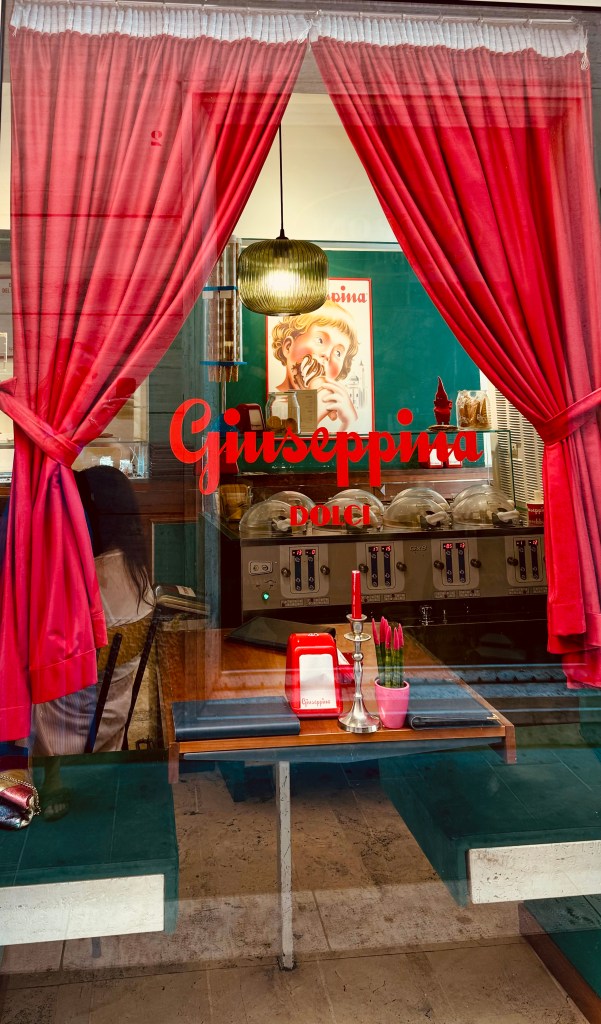
Queen of Tarts.
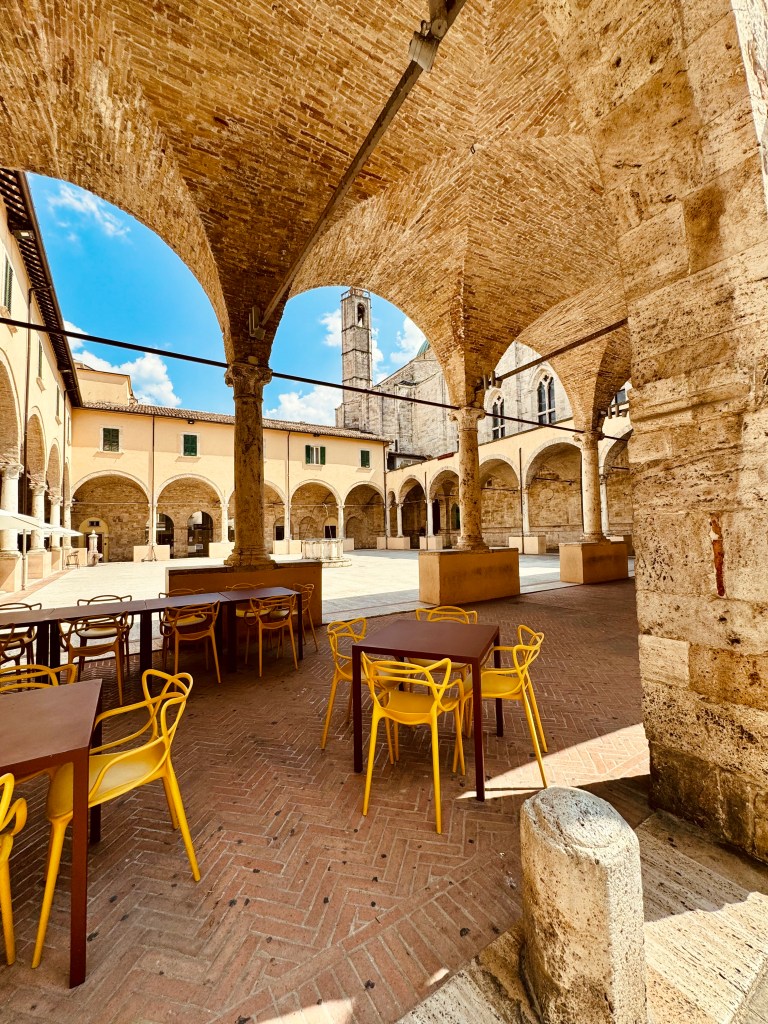
The tiny but fiercest competition for cornetti is located on Piazza del Popolo. At Guiseppina, you are being catapulted back to the Italy of the 70s while seated at a tiny table in the window, savoring the best cornetti and treats in town. Guiseppina firmly holds the confectioner’s scepter of Ascoli, and only those who have tasted one of her tarts shall call themselves true Ascolani.
Anise & Art Nouveau.
You simply can’t miss it: Café Meletti is the oldest café in Ascoli, proudly displaying its Art Nouveau splendor. Yet, even more famous than its wood-paneled interior is Meletti’s liqueur l’Anisetta, which whisks licorice lovers straight to cloud nine and makes the perfect souvenir for those who appreciate a digestif.
If nature calls at Café Meletti, you’ll be thrilled to find remnants of Roman walls under the glass washing tables. Living history!

Lunch, Aperitivo, Bar.
The Bistro of all Bistros.
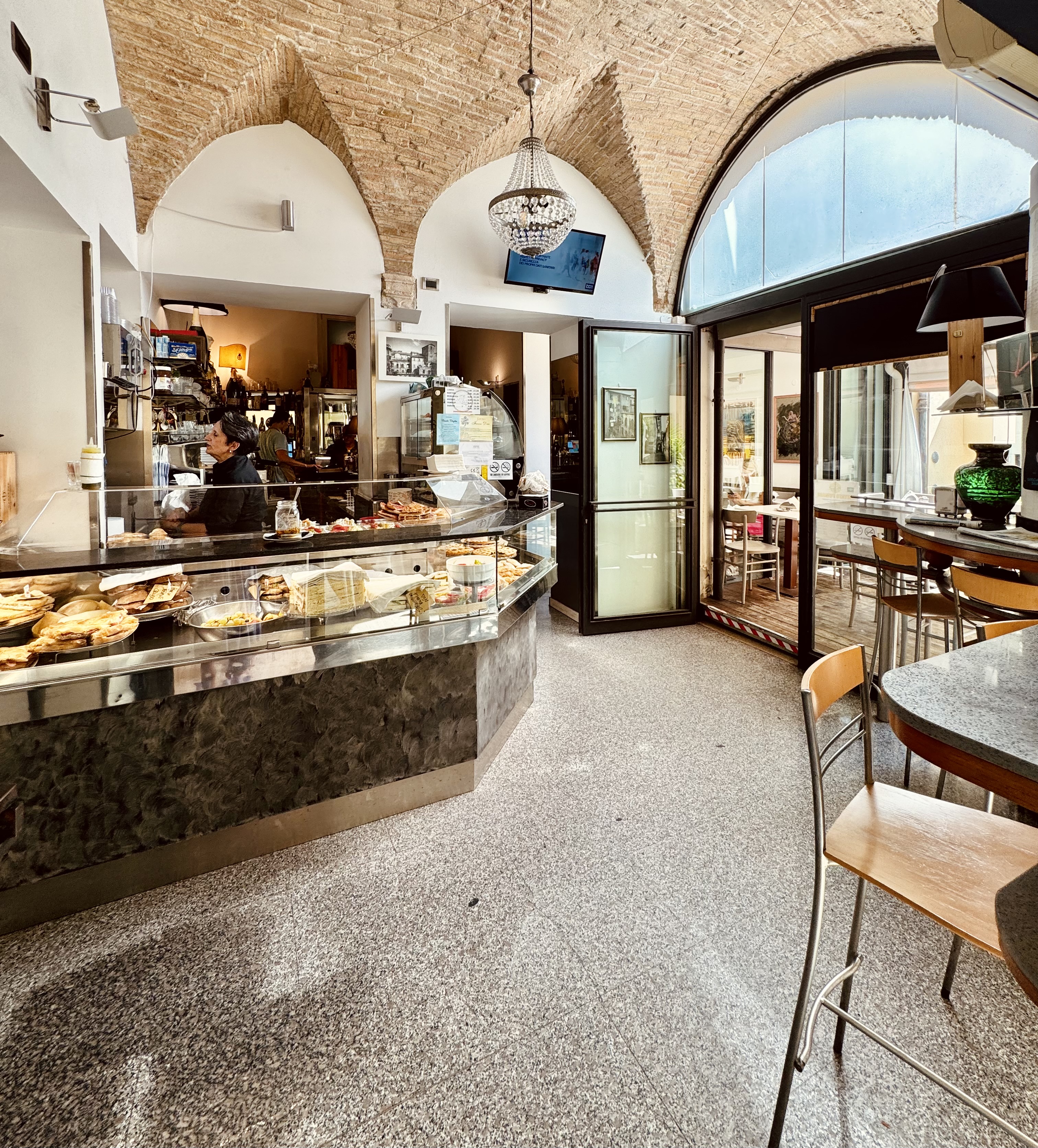
The counter at Café Kursaal proudly holds the title of the best-stocked in town. In this family-run bistro, everything is freshly prepared and charmingly presented. The lady of the house oversees every detail of her family establishment with great care while greeting her guests with a warm smile. Our top choice when hunger strikes during the day or when the craving for a Crodino on ice leads your steps toward the city center.

Tu vuò fà l’americano!
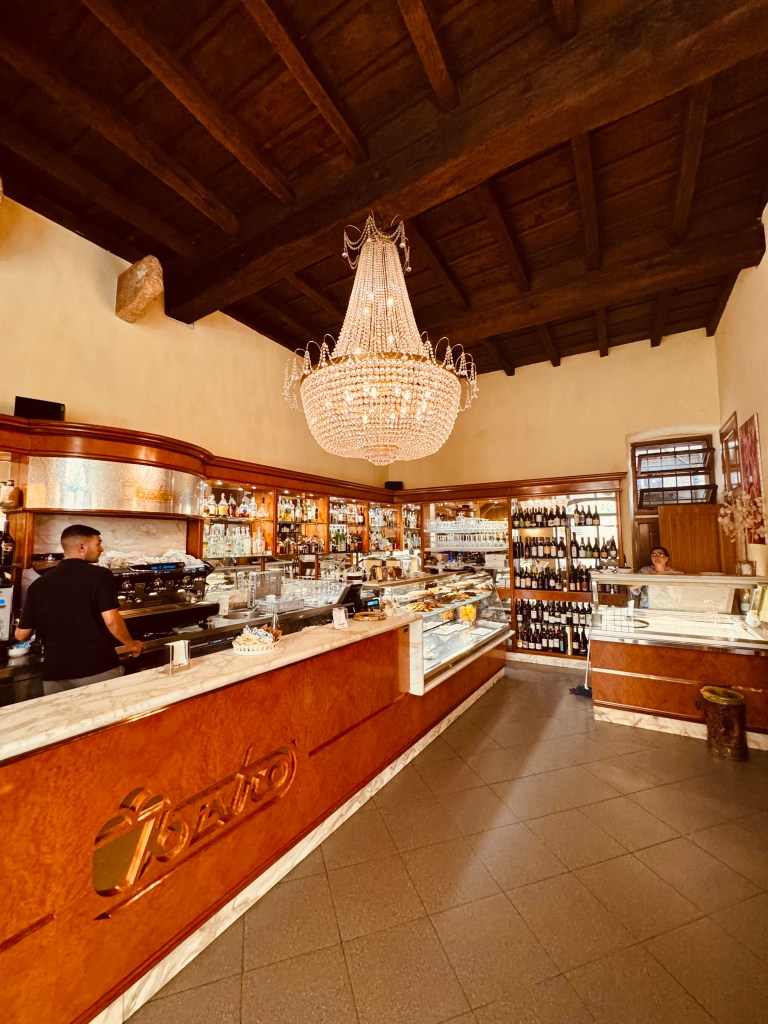
At The(!) Cafe Bistro, one can occasionally witness a double bass being carried in during the evening, and suddenly snippets of American phrases filling the air. What’s going on here? In this seemingly thoroughly Italian bistro, the local expats have found a gathering spot to drink, sing, laugh, and sometimes jam through the night. Lunchtime is quieter, featuring a small but delicious lunch menu. Highly recommended is the Amatriciana, the local pasta specialty from Amatrice, located just 50 kilometers away and tragically destroyed by the 2016 earthquake.
What time is it? It’s Aperitivo time!
At Osterie e Botteghe Francescane, the clock is set to Crodino, Campari, toasted bread and cold-whipped tomato spread. Even the children move in a clockwise direction with their scooters and balls around the fountain at the center of Piazza delle erbe. For those who still find time passing too quickly, there are olive d’ascolana, straccetti di pollo (fried chicken strips), and delicious carpaccio di manzo (beef) with mustard to order.

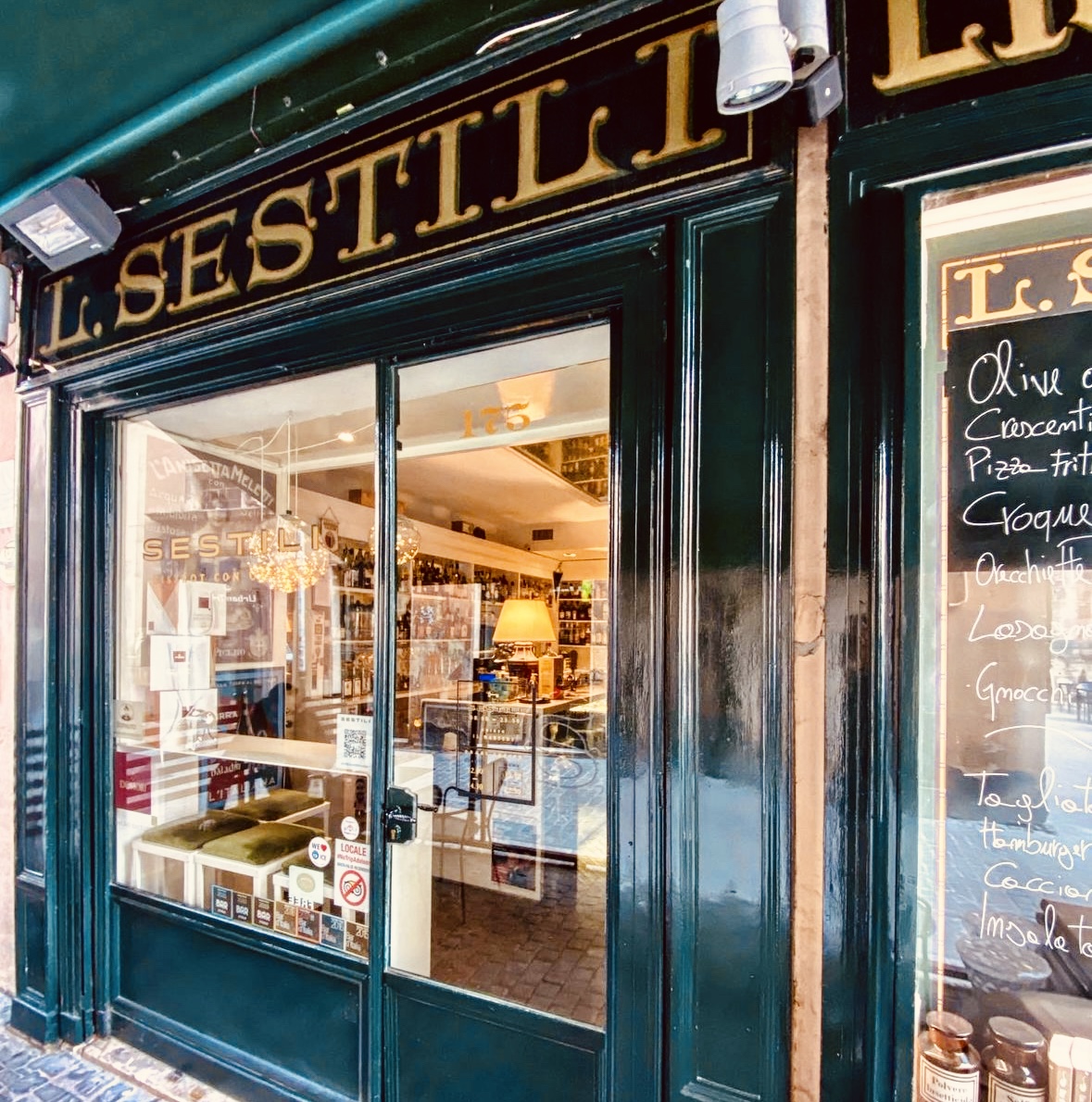
Around the world in 80 minutes.
Take off without gasoline or engine. At Bar Sestili near Piazza del Popolo, hearts become hot air balloons. This small, mirrored, and lovingly decorated bar could be found in Paris, New York, or London and matches the dedication of truly passionate bartenders.
Sacred.Essential.Late.
Dinner.
The ABCs of proper cena.
Anyone under the mistaken impression that one may jump straight to a plate of pasta at cena hasn’t properly studied its rules. In Italy, one starts dinner with antipasti. Only then may one choose between primo (pasta) and secondo (meat or fish). The meal shall be rounded off with dolce, sealed with caffé and finally be killed with a shot of flaming schnapps, the ammazzacaffé.
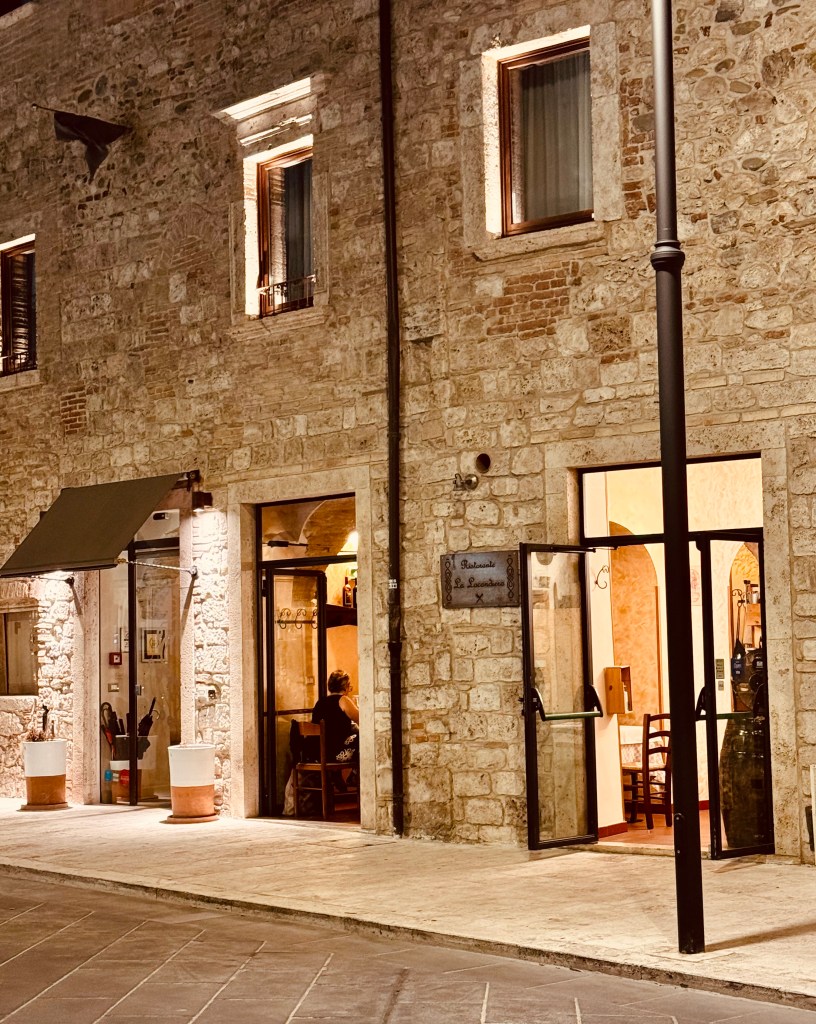
At La Locandiera, the best way to indulge in this ritual is by entrusting the choice of antipasti to the waiter. Here, small plates of house specialties are brought out one by one, including a little highlight: ricotta with black sea salt. For those who still want to save room for dessert, sharing a tagliata di manzo or pollo (grilled steak or chicken, sliced) is a wise choice.
Just Enough.
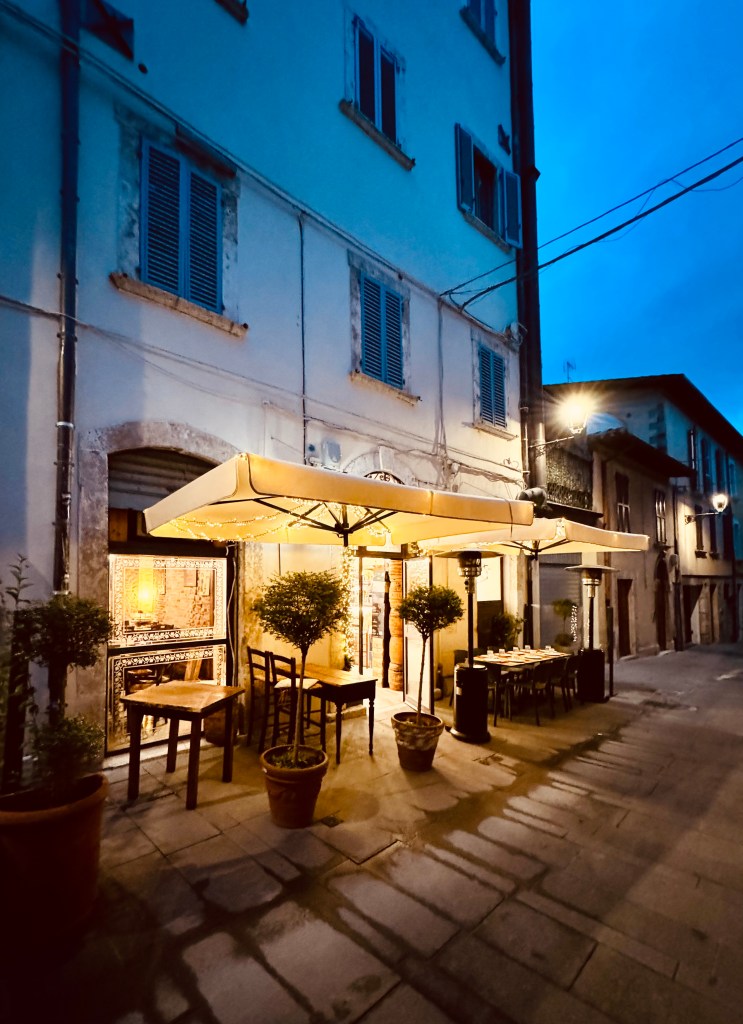
The Quanto Basta (“just enough”) quickly becomes your go-to spot after just one visit. Nowhere else does the atmosphere encourage long, leisurely evenings and generous wine consumption under the warm glow of small table lamps like this little hideaway. In the summer, the restaurant takes over the narrow street with tables, while in the winter, the cozy interior fires up the guts with a solid selection of cheese, ham, stew, and fried antipasti. More than enough.
Imperfect Inn.
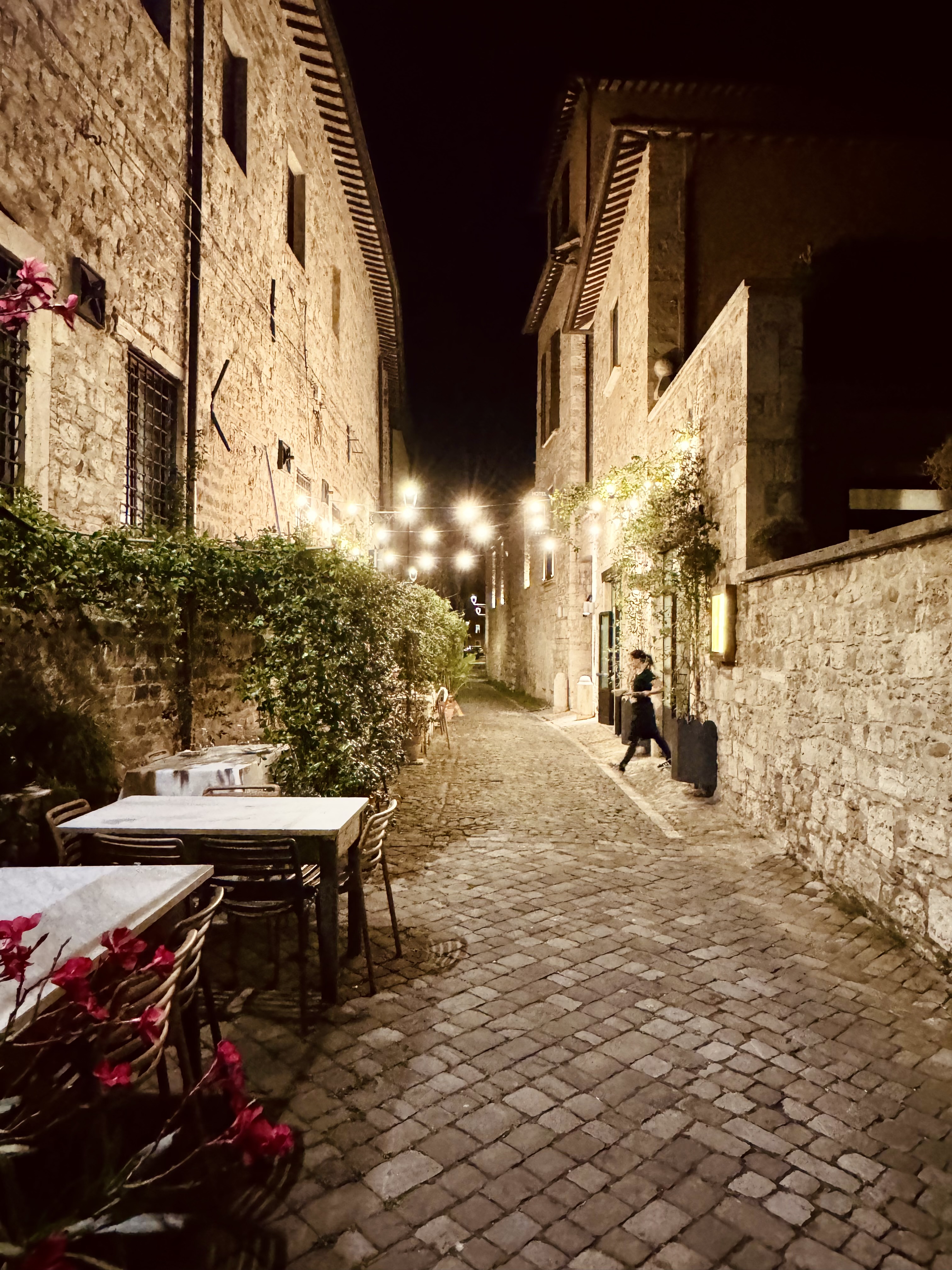
The name Locanda Imperfetta is the owner’s well-earned fishing for compliments, as all the ingredients for a perfect evening are present here: A small cobblestone alley. Strings of lights. Soft jazz music. White tablecloths. Delicious food. For special occasions or simply on a whim, the people of Ascoli head to Locanda Imperfetta. The chef could be considered experimental by Italian standards, crafting dishes from a selection of fine local products. A place where one occupies the table until late into the evening.
Love at second sight.
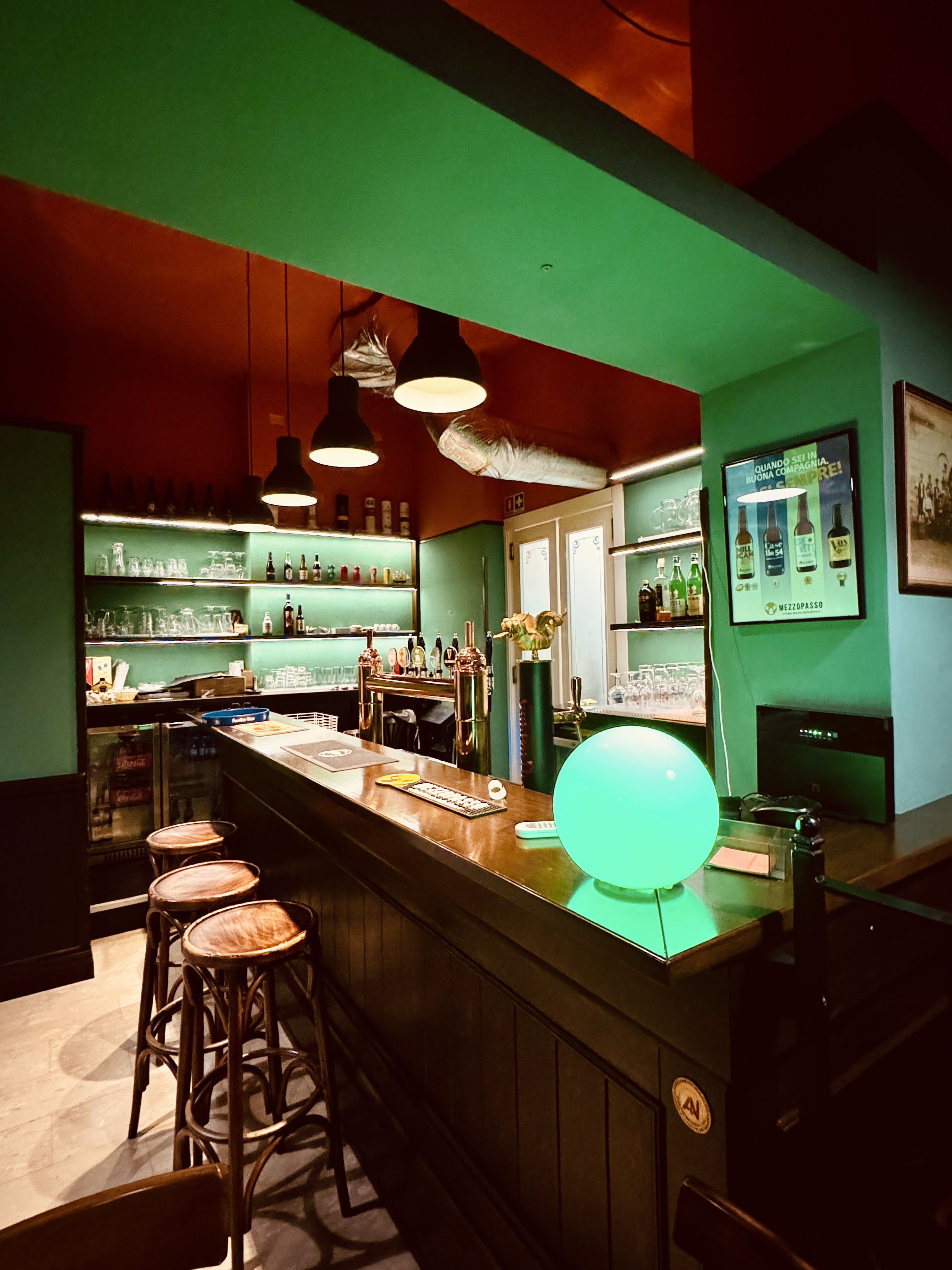
The paths to success are mysterious. Even masters of their craft, like Van Gogh or Chagall, knew this all too well. And so does the Birroteca57, an underrated—or rather, barely known—Pub, despite serving hands down the best burger in town. Run by father and son, this little green gem is undeniably powered by the heart and soul of true cosmopolitans. After their valiant, yet futile attempt to introduce Japanese ramen to the Italian palate, they’ve since then mastered a real burger (a true rarity in Italy, since quite often mistaken for just another panino) that will leave you in awed silence.
Now, if you’re in a rush and crave a bustling crowd, this isn’t the place for you. But if you can appreciate a truly great burger and the passion behind it, don’t miss out on this hidden culinary masterpiece. If you’re really lucky, you’ll be treated to a quirky mix of 80s music videos in the Pub’s TV, from Wicked Game to Stand by Me, played just for you, and you alone.
Once upon a time…
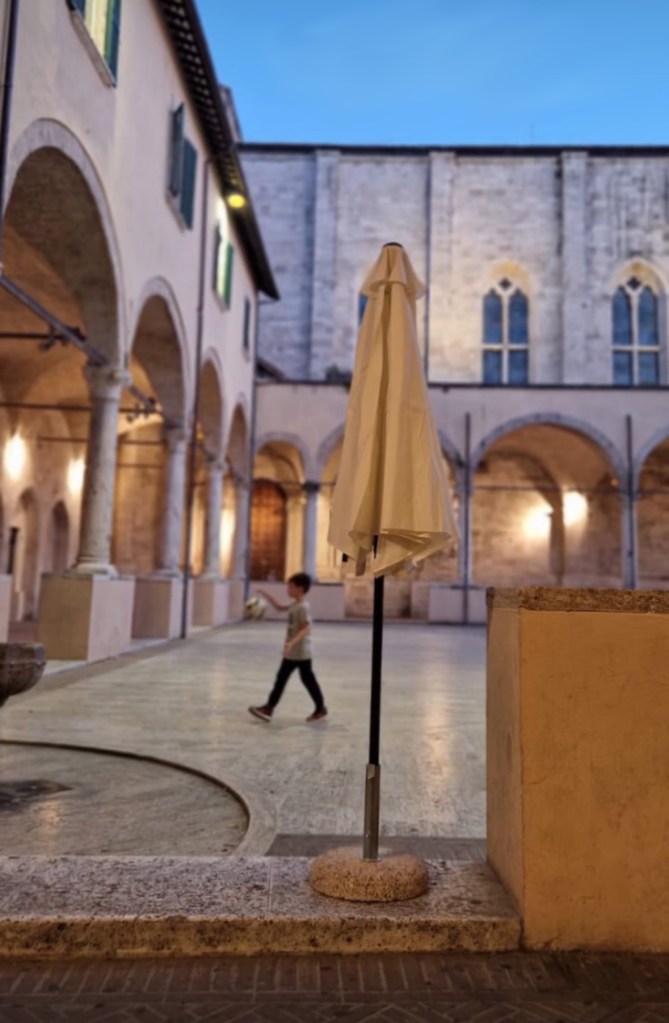
In the farthest corner of Pizza delle Verdure, right next to the cloister of a hidden monastery, you’ll stumble upon the tables of the small yet exquisite kitchen of C’era Una Volta that offers delicious seasonal dishes for lunch and dinner all year round. When the weather plays along, be sure to snag one of the cozy outdoor tables in time. Here, you’re seated in a tranquil backyard atmosphere right in front of the grand gate to a monastery garden, where nuns occasionally come and go. Inside, things tend to get lively around 8 PM.
Curtains up!
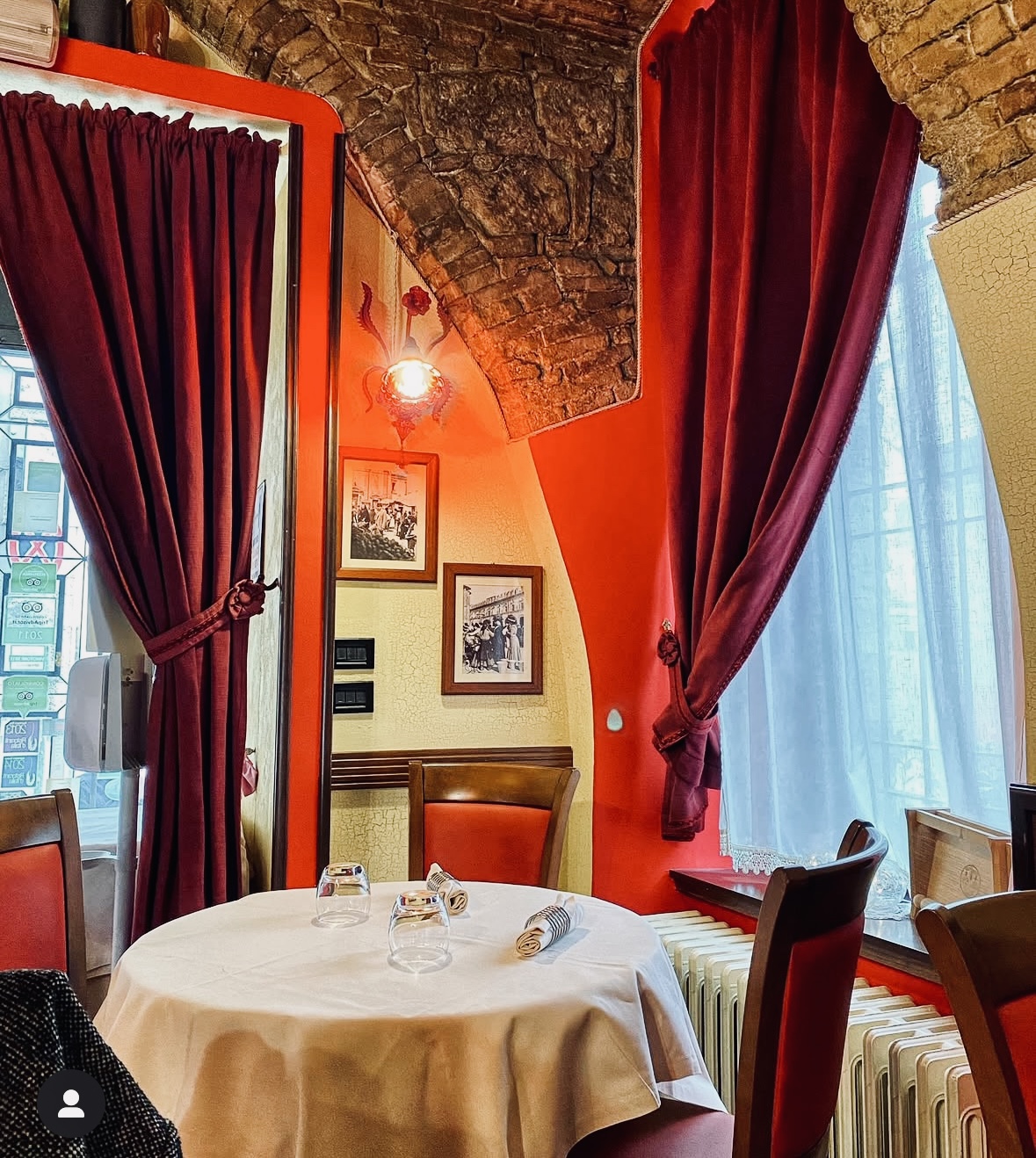
In the intimate Piccolo Teatro, the dining table doubles as the stage. Here, delectable, occasionally quirky, and sometimes rather pretentious dishes make their entrance onto the tablecloth. The interior of the “little theatre” is adorned in dark red velvet, staying true to its theme. However, the real charm is found in summer, when seating spills out onto the street, nestled between boxwood hedges and beneath strung-up fairy lights. The waiters deserve special mention—few places in the city offer such friendly and attentive service.
Around Ascoli.
From Hill to Hill.
The most beautiful of all.
Even Italians, who just moments earlier had been predicting the inevitable downfall of their country, have been seen arriving in Grottamare Alta and, with a good glass of wine in hand, suddenly bursting into rhapsodies about the unrivaled beauty and eternal romance of their homeland.
No wonder. Here, everything is still how it should be. The small village sits high above the sea, gazing down like a wise old lady upon the lights of modern Grottamare, endulging in its own beauty, not bothering about winds of change at all.
The village can be reached by car, parking right in front of the old town. Or by hopping on the little tourist train from the beach promenade.
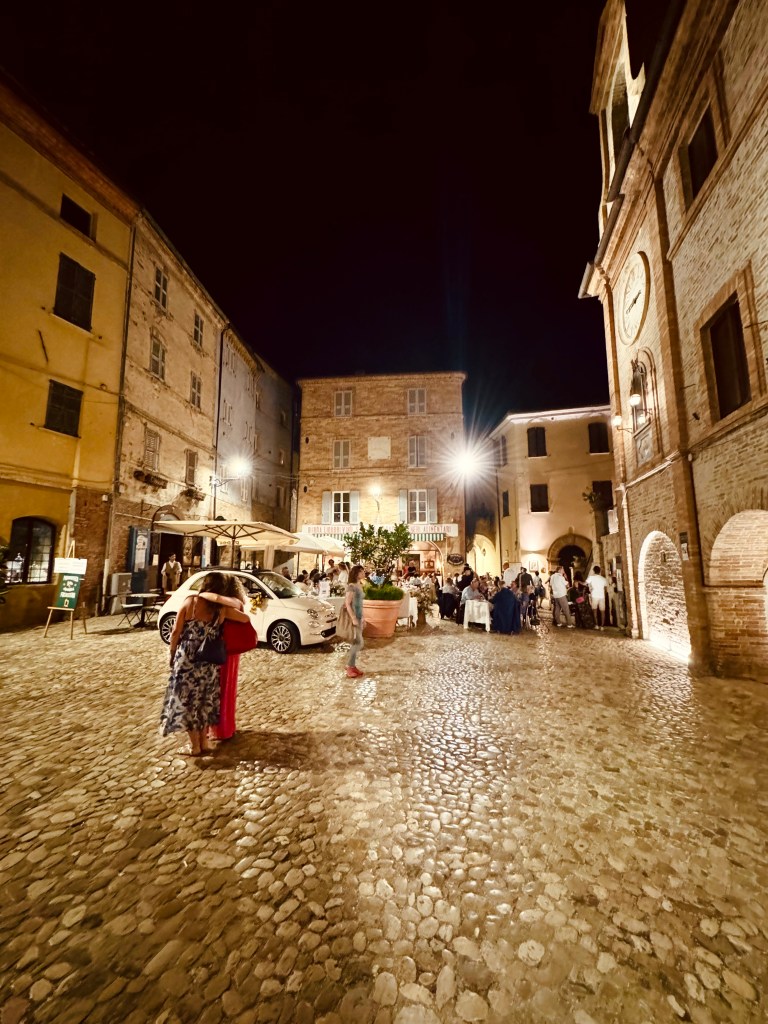
A visit here is worth it three times over: for dining at the former monastery La Cantina di Sant’Agustino (seated in the beautiful cloister garden), at Gusteau (pizza on a terrace under twinkling lights with a breathtaking view of the sea), or at Osteria dell’Arancio (on the most charming little piazza in all of Italy).
More is yet to come!
If you’ve made discoveries in and around Ascoli worthy of being shared here, feel free to leave us your tips in our Atelier Arringo guestbook!
 Atelier Arringo