

Enjoy golden hours at the B&B Atelier Arringo in Ascoli Piceno, Italy.
The room in the garden.
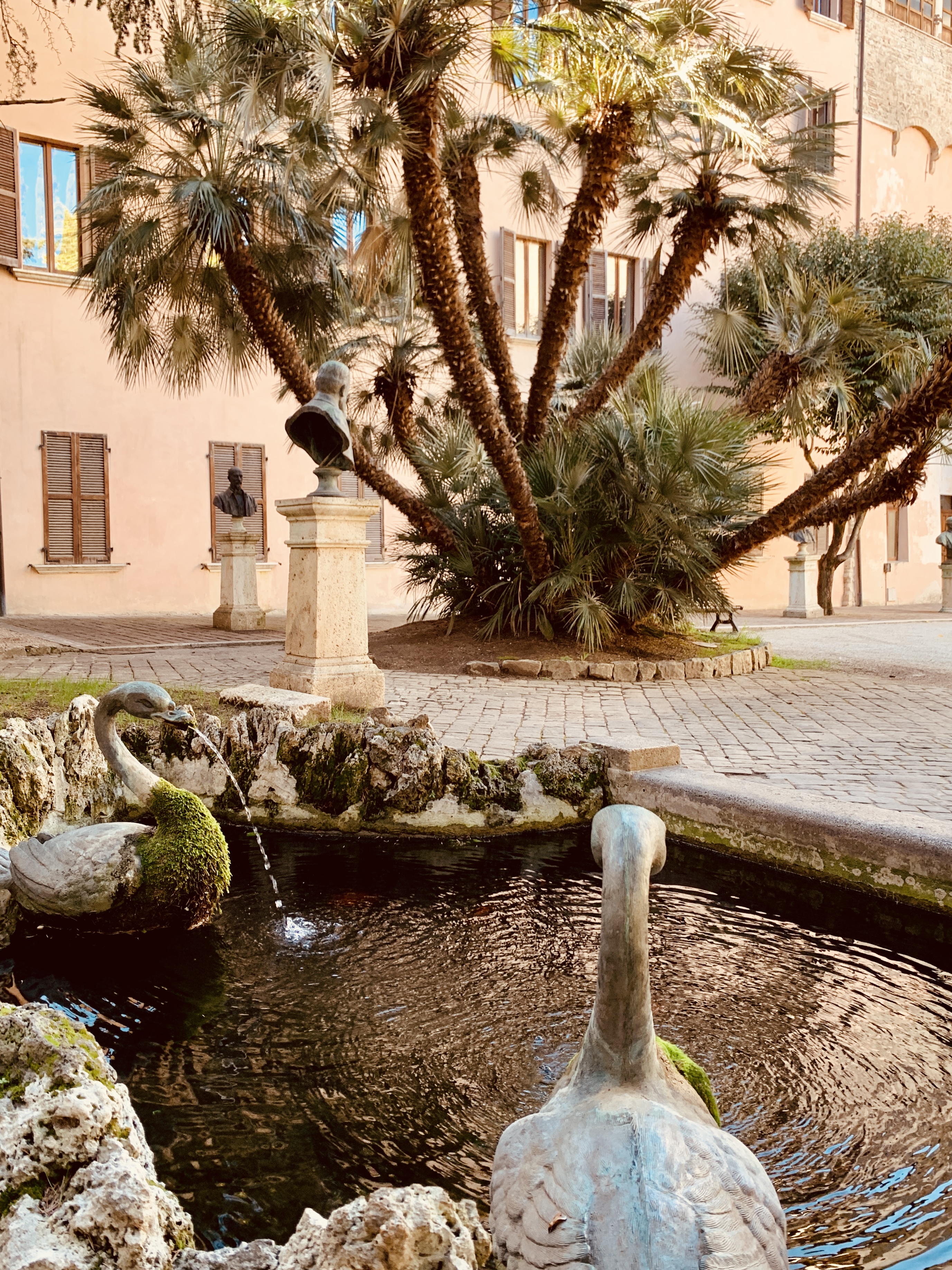
There is a window in the historic botanical garden of Ascoli, the Giardino dell’Arengo. A fountain splashes in front of it, the fish magnetically attracting the town’s children all year round. Birds greet the olive tree in the middle of the square. Old Lebanese cedar branches fan their scent into the evening air. Palm trees pointing the compass south. And behind an ancient stone wall a monastery garden, with its tended flower arrangements, overgrown pagodas and the lazy stone lion lounging in the grass since Roman times.
In the evening,
when the music swells and the people of Ascoli – gli Ascolani – drift in circles across Piazza del Popolo and Piazza Arringo, the room in the garden falls out of time: a guard makes his rounds, no doubt greeting the fish, closing the huge wooden gate to the world. All that remains is the soft splashing, the fresh smell, the olive tree, the bronze poets. The Roman columns on the ground. The night and the silence.
The room and the garden.


Lucia & her priest.
What stories might this ancient house have witnessed?
Lucia, housekeeper of a priest, lived here with her books, holy figures, her routines and pious trading cards. One woman in a garden full of men, the busts of old poets and important men that Ascoli claims for itself in front of the windows. Yet above her, hidden under the plaster on the ceiling, four other women kept her company: spring, summer, fall and winter as frescoes on the ceiling – with summer being a smiling woman in a jaunty hat.
Paintings and sculptures
have always been a good neighbors here, since hardly any soul has ever had the pleasure of living in this peaceful courtyard. Only one of the buildings surrounding the Giardino d’arringo is inhabited by people.
Today your hosts Fiona and Elena live here, in the former priest’s home. Attached to it the Atelier Arringo – the old housekeeper’s area. Connected internally they can be lived in independently of each other through separate entrances.
All the other buildings belong to the files and books of the town hall and the paintings and statues of the Pinacoteca, as they have always been.


 Atelier Arringo